Melasma vs Sun Spots: How to Differentiate, Causes, Treatment
If you’ve noticed dark patches or spots appearing on your skin, particularly after sun exposure, you might be wondering what exactly is happening with your skin.
Two common types of hyperpigmentation, melasma and sun spots, are frequently confused with each other, yet require different approaches for effective treatment. This comprehensive guide will help you understand the difference between these skin concerns and explore the most effective treatments available.
What Is Melasma?
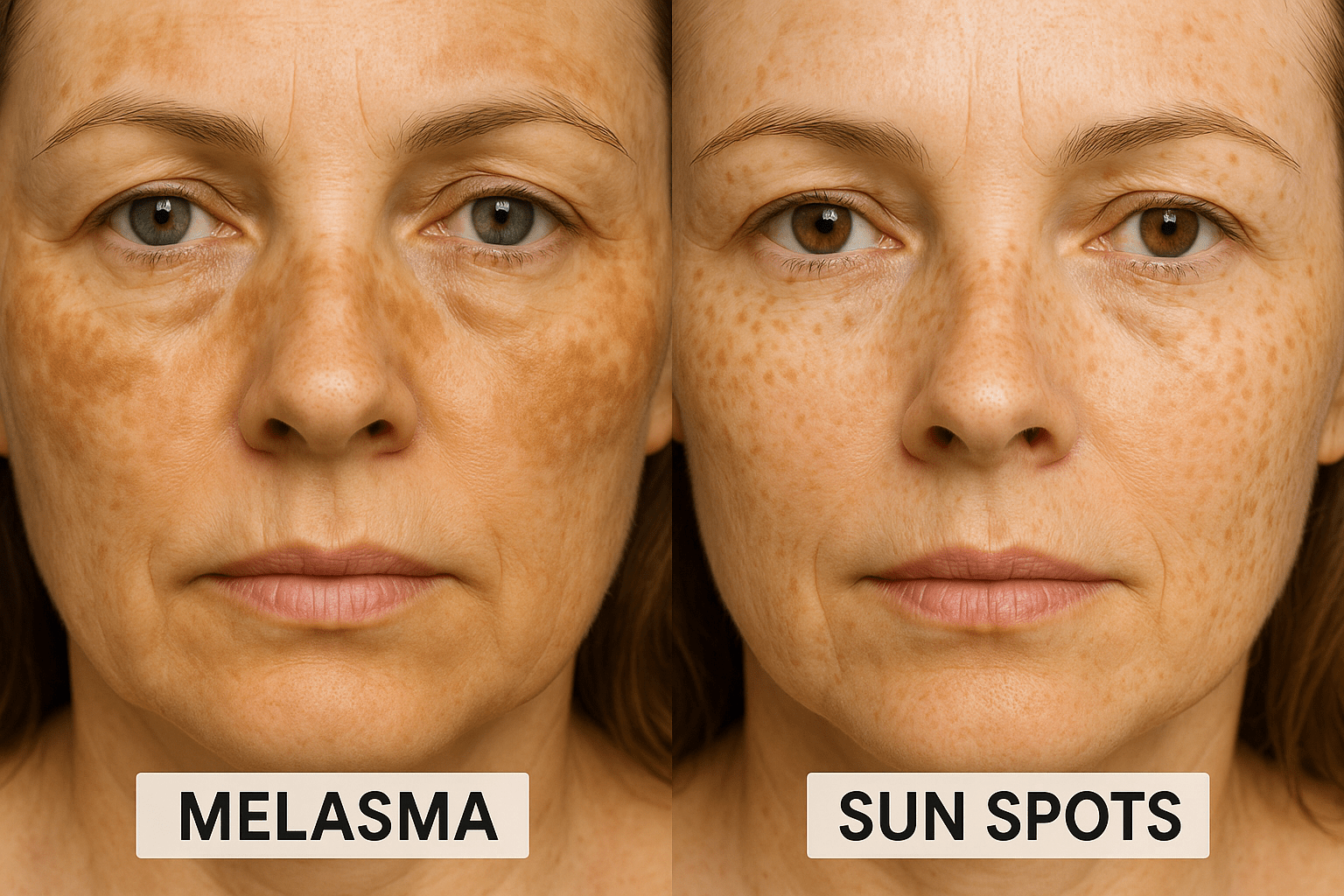
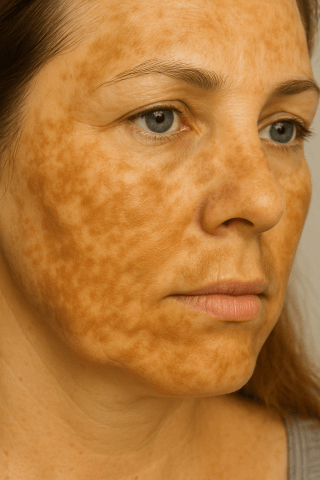
Melasma is a common skin condition characterized by symmetrical patches of hyperpigmentation that typically appear on the face. These patches are usually larger than sun spots and have irregular borders, appearing most commonly on the cheeks, forehead, upper lip, nose, and chin.
Key Characteristics of Melasma:
- Appears as larger, irregular patches (rather than distinct spots)
- Often symmetrical across the face
- Usually brown or grayish-brown in color
- More common in women (90% of cases)
- Frequently triggered by hormonal changes
What causes Melasma?
- Hormonal changes (pregnancy, birth control pills, hormone therapy)
- Genetic predisposition (more common in those with darker skin tones)
- Sun exposure (which can trigger or worsen existing melasma)
- Certain medications and skincare products
- Thyroid disorders
Melasma is sometimes called the “mask of pregnancy” because it frequently develops during pregnancy due to hormonal fluctuations. However, it can affect anyone, regardless of pregnancy status or gender.
What Are Sun Spots?
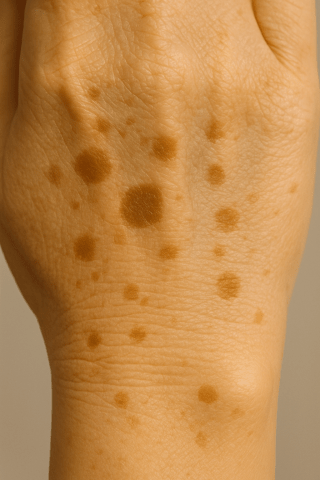
Sun spots, also known as solar lentigines or liver spots, are small, darkened areas on the skin caused by prolonged sun exposure. Unlike melasma, sun spots are directly linked to UV damage and tend to appear on areas regularly exposed to the sun.
Key Characteristics of Sun Spots:
- Small, distinct spots (usually 1-3mm in size)
- Flat with well-defined borders
- Light brown to dark brown in color
- Most common on the face, hands, shoulders, and arms
- Directly correlate with cumulative sun exposure
What causes Sun Spots:
- Cumulative UV exposure (both UVA and UVB rays)
- Natural aging process
- Genetic factors affecting skin pigmentation
- Decreased ability of skin to repair sun damage over time
Can Melasma and Sun Spots Coexist?
Yes, absolutely. Many patients experience both melasma and sun spots simultaneously, especially those who spend time outdoors in sunny climates. This dual presence can sometimes make diagnosis confusing without professional evaluation.
A key difference is that sun spots typically remain stable in appearance (unless you get more sun exposure), while melasma can fluctuate with hormonal changes and often worsens with even minimal sun exposure.
Treatment Options for Melasma and Sun Spots
-
Topical Treatments
For both conditions, first-line treatments often include:
- Hydroquinone-based creams (prescription-strength)
- Retinoids
- Vitamin C serums
- Kojic acid
- Azelaic acid
- Tranexamic acid
While these treatments can be effective, especially for mild cases, they typically require consistent long-term use, and results can be limited.
-
Chemical Peels and Microdermabrasion
Medium-depth chemical peels can help reduce both melasma and sun spots by removing the outer layers of damaged skin. However, for melasma in particular, aggressive treatments can sometimes worsen the condition, making gentler approaches preferred.
-
Advanced Laser Treatments
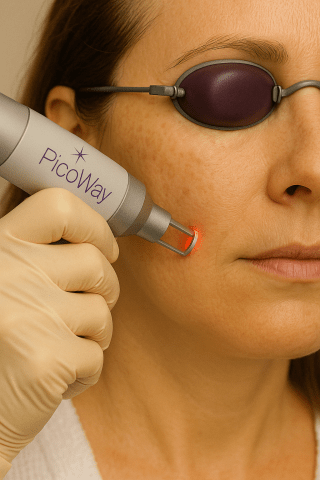
At LA ViE MD in the San Francisco Bay Area, we offer the revolutionary PicoWay laser system, which represents the gold standard in treating both melasma and sun spots. This advanced technology offers significant advantages over traditional treatments.
How PicoWay Works
PicoWay uses ultra-short, picosecond laser pulses (one trillionth of a second) that create a photoacoustic effect rather than relying on heat. This mechanism is particularly important because:
- The extremely short pulses shatter pigment particles into tiny fragments
- These smaller fragments are then more easily eliminated by the body’s natural processes
- The surrounding tissue experiences minimal thermal damage, reducing the risk of post-inflammatory hyperpigmentation
This precise targeting makes PicoWay especially effective for treating both melasma and sun spots while minimizing risks that are common with traditional laser treatments.
When to Choose PicoWay for Melasma vs. Sun Spots
PicoWay for Sun Spots
PicoWay is exceptionally effective for sun spots because:
- Sun spots contain concentrated melanin that responds well to the photoacoustic effect
- The treatment can target specific spots without affecting surrounding tissue
- Results are often visible within 1-3 sessions
- The risk of recurrence is lower than with many other treatments
PicoWay for Melasma
For melasma, PicoWay offers advantages because:
- The non-thermal approach reduces the risk of triggering additional melanin production
- The picosecond technology allows for gentler treatment of the larger affected areas
- The treatment can be precisely calibrated for different skin types
- It can target deeper pigmentation that topical treatments cannot reach
The LA ViE MD Approach
At our San Francisco Bay Area clinics, we understand that effective treatment requires a personalized approach:
- Comprehensive evaluation: We begin with a detailed skin analysis to distinguish between melasma, sun spots, and other forms of hyperpigmentation
- Customized treatment plan: Based on your specific condition, skin type, and lifestyle
- Combination therapy: Sometimes incorporating supporting treatments like medical-grade skincare
- Preventive strategies: Guidance on preventing recurrence that accounts for the Bay Area’s unique climate
Here’s what our patient had to say:
IMAGE: picoway-review-blog
Protecting Your Results
After treatment, preventing recurrence is crucial
- Daily use of broad-spectrum SPF 50+ sunscreen, even on foggy days
- Wearing wide-brimmed hats and UPF clothing during outdoor activities
- Avoiding peak sun hours for outdoor activities
- Considering oral supplements like Heliocare that provide additional sun protection
- Maintaining hormonal balance when possible (for melasma patients)
Take the First Step Toward Clearer Skin
If you’re struggling with melasma, sun spots, or other forms of hyperpigmentation, LA ViE MD offers the advanced PicoWay treatment that can help restore your skin’s natural clarity and evenness.
Our team of specialists understands the unique challenges and will create a personalized treatment plan to address your specific concerns.
Book a consultation with us today or visit our Livermore, Los Gatos or Danville locations.
FAQs
How can I tell if I have melasma or sun spots?
Melasma typically appears as larger, symmetrical patches with irregular borders, often on both sides of the face. Sun spots are usually smaller, more defined spots that appear in sun-exposed areas. Melasma tends to worsen with even minimal sun exposure and can fluctuate with hormonal changes, while sun spots are more stable. For a definitive diagnosis, consult with a specialist.
Is PicoWay treatment painful?
Most patients describe PicoWay treatment as comfortable with minimal discomfort. The sensation is often compared to a mild snapping feeling against the skin.
Is there any downtime after PicoWay treatment?
PicoWay treatments have minimal downtime compared to traditional lasers. Most patients experience slight redness that subsides within a few hours. Some patients might notice a mild darkening of treated areas followed by gradual fading over 1-2 weeks. You can typically return to normal activities immediately, though we recommend avoiding intense sun exposure for at least a week following treatment.
Will my melasma or sun spots come back after treatment?
Sun spots are less likely to recur if proper sun protection is maintained. Melasma, being influenced by hormonal factors, may return even with excellent sun protection, though treatments can significantly reduce its appearance.
Can I combine PicoWay with other treatments?
Yes, PicoWay treatments can be complemented by proper skincare regimens and other non-invasive treatments.
Disclaimer: This article is for informational purposes only and does not constitute medical advice. Always consult with a qualified healthcare provider for diagnosis and treatment recommendations.