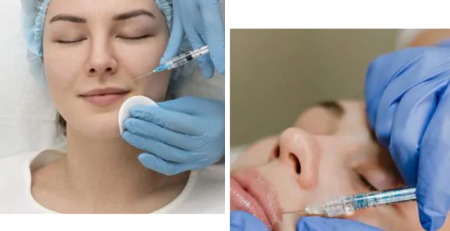
Lip Flip vs Lip Filler: Understanding the Difference
Lip flip vs filler represents two distinct cosmetic treatments that address different aesthetic concerns through fundamentally different mechanisms. A lip flip uses botulinum toxin type A (commonly known as Botox) to relax the orbicularis oris muscle along the upper lip border, causing the vermillion to gently roll outward and create the appearance of a fuller upper lip without adding volume. In contrast, lip filler uses FDA-approved dermal filler devices containing cross-linked hyaluronic acid to physically augment lip tissue, increasing both volume and projection throughout the upper and lower lips.
Understanding the distinction between these two approaches is essential for patients seeking lip enhancement at any of our Bay Area locations, from Danville to Dublin. While both procedures are performed by board-certified doctors and take less than 30 minutes to complete, they deliver results through entirely different biological pathways. The lip flip botox technique works by temporarily blocking nerve signals to specific muscle fibers, while lip filler hyaluronic acid integrates directly into tissue planes to provide structural support and hydration.
Patients throughout the Bay Area frequently ask whether they should pursue a lip flip vs lip injection, or whether combining lip flip filler strategies might deliver optimal outcomes. This comprehensive guide examines the mechanism of action, treatment timeline, candidate selection criteria, recovery expectations, and combination protocols for both modalities. Board-certified physicians at LA ViE MD evaluate facial anatomy, aesthetic goals, and individual tissue characteristics to recommend the most appropriate intervention or combination approach for each patient’s unique presentation.

What Is a Lip Flip and How Does It Work?

A lip flip is a minimally invasive cosmetic procedure that uses small doses of botulinum toxin type A injected into the orbicularis oris muscle at the vermillion border of the upper lip. According to the Mayo Clinic Botox injection overview, botulinum toxin works by blocking acetylcholine release at the neuromuscular junction, preventing muscle contraction for a temporary period. When applied to the upper lip, this selective muscle relaxation allows the tissue to roll slightly upward and outward, revealing more of the pink vermillion and creating the illusion of a fuller lip without adding any actual volume.
The treatment typically requires only two to four injection points along the upper lip border, using between two and six units of neurotoxin total. Board-certified injectors at our Livermore and Los Gatos clinics perform the procedure in under ten minutes, with patients experiencing minimal discomfort from the ultra-fine needle. Unlike dermal filler placement, which immediately changes lip contour, the lip flip results gradually emerge over five to seven days as the neurotoxin takes effect and the muscle fibers begin to relax.
This approach specifically targets patients who have a thin upper lip due to natural muscle tension that pulls the vermillion inward, or those who show excessive gingival display when smiling. The lip flip does not change the actual size or structure of the lip tissue itself. Instead, it modifies how the existing tissue sits at rest and during animation. Patients maintain normal lip function for speaking and eating, though some report a temporary sensation of heaviness during the first few days as they adjust to the altered muscle activity. The effect is subtle and natural-looking, making it popular among patients seeking minimal enhancement without the commitment or visibility associated with volumizing fillers.
Lip Flip vs Filler: Side-by-Side Comparison
A direct comparison of lip flip vs filler reveals distinct differences in mechanism, longevity, recovery timeline, and aesthetic outcome. Lip flip uses neurotoxin to relax the orbicularis oris muscle at the vermillion border, allowing the upper lip to gently roll outward and appear fuller without adding physical volume. In contrast, lip filler relies on cross-linked hyaluronic acid dermal filler that adds measurable volume to the lip tissue planes.
| Treatment Feature | Lip Flip (Botox) | Lip Filler (Hyaluronic Acid) |
|---|---|---|
| Primary Mechanism | Neurotoxin relaxes orbicularis oris muscle at vermillion border | Cross-linked hyaluronic acid gel adds physical volume to lip tissue planes |
| Results Timeline | Gradual onset over 5–7 days, peak at 10–14 days | Immediate volumization; final result after swelling subsides (3–7 days) |
| Duration of Effect | 8–12 weeks on average; requires repeat treatment quarterly | 12 months (Volbella); 18 months (Vollure); product-dependent |
| Downtime and Recovery | Minimal; possible mild tenderness for 24–48 hours | 1–3 days of swelling and possible bruising |
| Cost Per Treatment | $150–$300 for 2–4 units | $650–$1,200 per syringe; most treatments use 1–3 syringes |
| Ideal Candidate Profile | Thin upper lip due to muscle tension, gummy smile, subtle enhancement preference | Volume loss, lip augmentation, asymmetry correction, border definition |
| Injection Technique | 2–4 superficial injections along vermillion border | Multiple serial puncture or linear threading injections throughout lip body |
The choice between lip flip vs filler depends entirely on anatomical starting point and aesthetic objective. A lip flip modifies muscle behavior to reveal existing tissue, making it appropriate for patients who have adequate lip volume but experience inward curl or excessive animation. Hyaluronic acid fillers physically augment tissue that is genuinely thin, aged, or asymmetric through formulations such as Volbella and Vollure, which target mid-depth tissue planes for lips and lines. Neither approach is universally superior; each addresses a distinct set of concerns through a unique biological pathway.
Longevity is a critical factor in maintenance planning. While the neurotoxin effect in a lip flip wanes after approximately three months and requires repeat sessions four times per year, hyaluronic acid fillers provide structural support for 12 months with Volbella or up to 18 months with Vollure. Patients seeking low-commitment trial enhancement prefer the shorter duration of a lip flip, whereas those ready for sustained volume benefit from the extended longevity of FDA-approved dermal filler formulations. Side effects differ as well: lip flips produce minimal tenderness for 24–48 hours, while fillers cause 1–3 days of swelling and possible bruising, with rare vascular occlusion representing a medical emergency.
How Hyaluronic Acid Fillers Add Volume to Lips
Hyaluronic acid dermal fillers are gel-based injectable devices composed of cross-linked polysaccharide chains that integrate into the extracellular matrix of lip tissue. According to the Cleveland Clinic dermal filler information, hyaluronic acid is a naturally occurring glycosaminoglycan that binds up to 1,000 times its weight in water, providing both immediate volume and sustained hydration to treated areas. When injected into the lips, these gels physically expand tissue planes, smooth out fine vertical lines, enhance border definition, and correct asymmetry through precise volumization.
The Juvéderm family of hyaluronic acid fillers includes multiple formulations engineered for specific tissue depths and aesthetic indications. Volbella, designed specifically for lip augmentation and perioral lines, uses Vycross technology to create a smooth, malleable gel that integrates seamlessly into the delicate lip tissue. Clinical data shows Volbella maintains volume correction for up to 12 months following a single treatment session. Vollure, a mid-range viscosity product, is FDA-approved for nasolabial folds and moderate lip enhancement, with results lasting up to 18 months. These products are injected using either serial puncture technique or linear threading, depending on the anatomical area and desired outcome.
Board-certified injectors at our Dublin clinic evaluate lip architecture, vermillion show, philtral column definition, and overall facial proportion before selecting the appropriate hyaluronic acid formulation and injection strategy. The treatment involves multiple small deposits of filler placed along the vermillion border, within the body of the lip, and sometimes into the philtral columns to enhance the Cupid’s bow. Most patients require one to two syringes for full lip augmentation, though conservative approaches using half a syringe can achieve natural-looking enhancement in patients with moderate existing volume.
Unlike the lip flip, which requires no recovery beyond minor injection site tenderness, hyaluronic acid lip filler typically produces one to three days of visible swelling and possible bruising. This downtime reflects the physical displacement of tissue and the inflammatory response to needle trauma. Patients are advised to avoid blood-thinning medications, strenuous exercise, and alcohol for 24 to 48 hours before and after treatment to minimize bruising risk. The final aesthetic result becomes apparent once post-procedure edema resolves, usually within one week of injection.

Who Is the Best Candidate for Each Treatment?
Candidate selection for lip flip versus lip filler depends on baseline anatomy, aesthetic goals, tolerance for downtime, and budget for ongoing maintenance. The lip flip is ideally suited for patients who have a naturally thin upper lip not due to volume deficiency, but rather because the orbicularis oris muscle contracts strongly and pulls the vermillion inward. This anatomical pattern is common in younger patients or those with a naturally animated smile that causes the upper lip to disappear when expressing emotion. A lip flip also benefits individuals with mild gummy smile, as relaxing the muscle reduces elevation of the upper lip during smiling.
Patients who prefer subtle, low-commitment enhancement and wish to avoid the swelling associated with volumizing products are excellent candidates for the lip flip. This treatment does not change the fundamental size or projection of the lip, so it will not satisfy patients seeking dramatic augmentation or correction of significant asymmetry. Additionally, individuals who require longer-lasting results without the need for quarterly appointments may find the three-month duration of a lip flip inconvenient compared to the year-long effect of hyaluronic acid fillers.
Conversely, lip filler candidates typically present with genuine volume loss due to aging, genetic predisposition to thin lips, or desire for enhanced border definition and overall fullness. Hyaluronic acid injections can reshape the lip contour, create a more pronounced Cupid’s bow, smooth vertical rhytids, and correct asymmetry through precise volumization. Patients seeking measurable, visible change in lip size and structure benefit most from dermal filler placement. Those who have already undergone a lip flip and desire additional volume often transition to filler or pursue combination treatment.
Medical contraindications apply to both modalities. Patients who are pregnant, breastfeeding, or have active infection in the treatment area should postpone injectable procedures. Individuals with a history of severe allergic reactions to botulinum toxin or hyaluronic acid should avoid the respective product. Board-certified doctors at our Los Gatos and Livermore clinics conduct thorough medical history review and facial assessment during the initial consultation to determine safety, appropriateness, and realistic outcome expectations for each patient’s unique presentation.
Combining Lip Flip and Filler for Comprehensive Enhancement
When evaluating lip flip vs filler, many patients find that combining both treatments addresses multiple aesthetic concerns simultaneously. A lip flip uses neurotoxin to relax the orbicularis oris muscle along the upper lip border, creating subtle eversion of the vermillion. Lip filler, such as Juvéderm Volbella—an FDA-approved cross-linked hyaluronic acid dermal filler from Allergan—adds structural volume to the body and border of the lips. Together, these treatments target both muscle hyperactivity and volume deficiency for comprehensive enhancement.
The typical combination protocol involves scheduling treatments sequentially or in a single session. With the sequential approach, the neurotoxin is administered first and allowed to take full effect before filler placement. With the single-session approach, both treatments are performed during the same visit, which reduces the number of appointments required. Juvéderm Volbella is formulated for mid-dermal injection and is FDA-approved specifically for lip augmentation, making it a common choice for combination protocols.
Best candidates for combination treatment include patients with thin lips due to both inward muscle tension and insufficient tissue volume, those over 40 experiencing age-related volume loss, and individuals seeking border definition along with subtle lip eversion. The neurotoxin component softens the upper lip line and reduces animation-related thinning, while the hyaluronic acid filler provides structural volume, border definition, and hydration. This dual-modality approach allows for conservative filler placement, as the neurotoxin contributes to the appearance of fullness without requiring excessive product volume.
Maintenance scheduling for combination treatment differs between modalities. Lip flips typically require touch-ups every 10 to 12 weeks, while Juvéderm Volbella provides results lasting up to 12 months. The cost for Volbella ranges from $650 to $1,200 per syringe, with most lip treatments using one to two syringes. Downtime includes 1 to 3 days of swelling and possible bruising from the filler component. Side effects from hyaluronic acid fillers include swelling, bruising, and tenderness, with rare vascular occlusion requiring immediate medical attention. Board-certified injectors track treatment history and adjust dosing over time to maintain consistent results and avoid overcorrection.
Side Effects, Risks, and Recovery Differences

The side effect profiles of lip flip botox and lip filler hyaluronic acid differ significantly due to their distinct mechanisms and injection techniques. Lip flip procedures using botulinum toxin carry minimal risk of visible bruising or swelling because only two to four superficial injections are required along the vermillion border. Most patients experience mild tenderness at the injection sites for 24 to 48 hours, with no visible external evidence of treatment. Rare side effects include temporary asymmetry if the neurotoxin diffuses unevenly, difficulty drinking through a straw or pursing the lips during the first week, and a sensation of lip heaviness as the muscle adjusts to reduced contractility.
Serious complications from lip flip injections are exceedingly rare when performed by trained medical professionals. Infection at the injection site, allergic reaction to the neurotoxin, and unintended diffusion to adjacent muscle groups can occur but are prevented through sterile technique, thorough patient screening, and precise anatomical injection placement. According to the WebMD cosmetic injection procedures resource, the majority of botulinum toxin adverse events are temporary and resolve spontaneously as the neurotoxin effect wanes over the subsequent three months.
Hyaluronic acid lip filler injections produce more predictable short-term side effects due to the volumizing nature of the product and the greater number of needle passes required. Swelling is universal and typically peaks within 24 to 48 hours, persisting for one to three days before resolving. Bruising occurs in approximately 30 to 50 percent of patients and can be minimized through pre-treatment avoidance of aspirin, nonsteroidal anti-inflammatory drugs, fish oil, and alcohol. Tenderness, firmness, and minor irregularities are common during the first week as the hyaluronic acid integrates into the tissue and post-injection inflammation subsides.
The most serious complication associated with dermal filler injection is vascular occlusion, a rare but potentially devastating event in which filler inadvertently enters an artery and blocks blood flow to downstream tissue. Signs of vascular compromise include severe pain, blanching, mottling, or delayed capillary refill. Immediate recognition and treatment with hyaluronidase, an enzyme that rapidly dissolves hyaluronic acid, can prevent tissue necrosis. Board-certified injectors at LA ViE MD are trained in emergency management protocols and maintain hyaluronidase on-site at all Bay Area locations to ensure rapid intervention if vascular compromise is suspected. This level of preparedness and clinical expertise is essential for patient safety during all dermal filler procedures.

Results Timeline: When to Expect Visible Changes
The timeline for visible lip flip results differs markedly from the immediate volumization seen with hyaluronic acid fillers. Following a lip flip injection, patients typically notice no change for the first 48 to 72 hours, as the botulinum toxin requires time to bind to nerve terminals and inhibit acetylcholine release. Gradual eversion of the upper lip becomes apparent between days five and seven, with peak effect occurring at 10 to 14 days post-treatment. During this onset period, patients may feel subtle changes in lip mobility or a slight heaviness, but external observers often do not detect treatment until the vermillion fully everts and the muscle relaxation is complete.
The lip flip results remain stable for approximately eight to twelve weeks, after which the neurotoxin is metabolized and the muscle gradually regains its baseline contractility. Patients who maintain their results through regular retreatment often notice that subsequent sessions require slightly lower doses or last marginally longer, a phenomenon attributed to partial muscle atrophy from repeated denervation. This cumulative effect is mild and does not eliminate the need for ongoing maintenance, but it can extend the interval between appointments from ten weeks to twelve or even fourteen weeks in some individuals.
In contrast, hyaluronic acid lip filler produces immediate volumization that is visible as soon as the product is injected. However, the final aesthetic outcome is not apparent until post-procedure swelling resolves, typically within three to seven days. During the first 48 hours, lips appear overcorrected and may feel firm or lumpy due to edema and localized inflammation. As swelling subsides, the hyaluronic acid settles into the tissue planes and the lips assume a softer, more natural contour. Patients are counseled to wait a full two weeks before evaluating their final result or considering additional product placement.
Long-term stability of hyaluronic acid filler depends on the specific product formulation and the metabolic activity of the treated tissue. Volbella, designed for lip augmentation, maintains volume correction for up to 12 months in clinical trials, while Vollure demonstrates efficacy for up to 18 months in the nasolabial folds and moderate lip enhancement. Individual patient factors such as metabolism, lifestyle habits, and degree of lip animation influence longevity. Patients with high metabolic rates or who engage in frequent strenuous exercise may experience slightly shorter filler duration, while those with lower metabolic activity and less dynamic facial movement often enjoy extended results beyond the manufacturer’s published data.
Frequently Asked Questions (FAQs)
What is the difference between a lip flip and lip filler?
A lip flip uses botulinum toxin to relax the orbicularis oris muscle along the upper lip border, causing the vermillion to roll outward and create the appearance of a fuller lip without adding actual volume. Lip filler uses hyaluronic acid gel to physically augment lip tissue, increasing both volume and projection throughout the upper and lower lips. The lip flip modifies muscle activity, while filler changes the structural composition and size of the lip itself.
How long does a lip flip last compared to filler?
A lip flip typically lasts eight to twelve weeks, requiring repeat treatment approximately every three months to maintain results. Hyaluronic acid lip fillers last significantly longer, with Volbella maintaining volume correction for up to 12 months and Vollure for up to 18 months. The shorter duration of the lip flip reflects the temporary nature of neurotoxin muscle relaxation, while the extended longevity of fillers is due to the slow enzymatic breakdown of cross-linked hyaluronic acid within tissue planes.
Can you combine a lip flip with lip filler?
Yes, combining a lip flip with lip filler is a common and effective strategy for comprehensive lip enhancement. The lip flip addresses muscle hyperactivity and upper lip eversion, while hyaluronic acid filler adds structural volume and border definition. This dual approach is particularly beneficial for patients who have both inward muscle tension and volume deficiency, allowing for balanced, natural-looking results that neither treatment alone could achieve. Board-certified injectors often perform the treatments in sequence or during a single session depending on the patient’s anatomy and goals.
Is a lip flip or lip filler better for thin upper lips?
The answer depends on the cause of the thin appearance. If the upper lip appears thin due to strong muscle contraction that pulls the vermillion inward, a lip flip is the appropriate treatment because it relaxes the muscle and allows existing tissue to evert. If the upper lip is genuinely lacking in volume due to genetics or aging, hyaluronic acid filler is necessary to physically augment the tissue and create measurable fullness. A thorough consultation with a board-certified injector will determine which anatomical pattern is present and which treatment will deliver the desired outcome.
How much does a lip flip cost versus lip filler?
Pricing depends on your treatment plan and is discussed during your free consultation at LA ViE MD.
What are the side effects of a lip flip versus filler?
Lip flip side effects are minimal and typically include mild tenderness for 24 to 48 hours, temporary difficulty with straw use or lip pursing, and rare asymmetry if neurotoxin diffuses unevenly. Hyaluronic acid lip filler causes one to three days of visible swelling, bruising in 30 to 50 percent of patients, tenderness, and temporary firmness as the product integrates. Serious complications such as vascular occlusion are rare with filler but require immediate medical intervention. Both treatments carry minimal risk when performed by trained, board-certified medical professionals using sterile technique and anatomical precision.
Medical Disclaimer: This content is for educational purposes only and is not a substitute for personalized medical advice. Individual results vary. Schedule a consultation with Dr. Neetu Nebhwani at LA ViE MD to determine the best treatment for your skin or wellness goals.