Skin Tightening After Weight Loss: What Works and When
Skin that loosened after weight loss can often be improved, but the right option depends on how much skin you have. Mild to moderate laxity responds to energy-based treatments such as radiofrequency and ultrasound, plus time, protein and strength training. Large folds after major weight loss are usually a surgical question. Here is how to tell which group you are in, and what to do first.
TL;DR
- Skin can keep remodeling for 6 to 12 months after your weight stabilizes, so the best time to judge your results is after you hold a steady weight.
- Non-surgical tightening suits mild to moderately loose skin. It works gradually, usually takes several sessions and is repeated over time.
- Heavy overhanging skin after losing 100 pounds or more is typically addressed with body contouring surgery, planned once weight has been stable.
- Choose a licensed, experienced provider for any energy-based device. Physician oversight matters for your safety.
Table of Contents
- Why skin loosens after weight loss
- How loose is your skin? A simple way to sort your options
- What you can do on your own first
- Non-surgical skin tightening: how it works
- Safety: choosing who treats you
- When surgery is the realistic answer
- Perspective from our physician
- A sample timeline
- Tighten your skin with LA ViE MD
- FAQ
- Sources
Why skin loosens after weight loss
Skin gets its snap from collagen and elastin in the dermis. WebMD explains that, like a rubber band stretched far enough for long enough, skin may not return to its original shape once what it covered is gone.
Four things shape how much laxity you end up with:
- Speed of loss. Fast loss gives skin less time to adapt.
- Amount lost. The percentage of your total body weight matters more than the number on the scale.
- Time at your starting weight. The longer skin was stretched, the less it recoils.
- Genetics and age. Both affect collagen quality, and you cannot change either.
People losing weight with GLP-1 medications often ask whether the drug itself loosens skin. The more accurate picture is that rapid weight loss on a GLP-1 is a significant source of skin laxity concerns, because speed is the common thread. The same physics applies however the weight comes off.
How loose is your skin? A simple way to sort your options
Before comparing treatments, place yourself on this scale. A physician exam confirms it, but it is a useful starting point.
| What you notice | Typical category | Usual direction |
|---|---|---|
| Slight crepey texture, softer jawline, mild looseness on arms or abdomen | Mild | Habits plus non-surgical tightening |
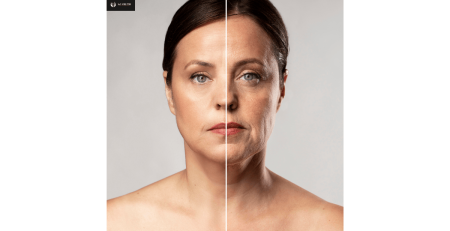
| Visible sagging that still pinches back partly, loss of firmness on face, neck, arms, thighs | Moderate | Non-surgical tightening series, sometimes with injectables for volume |
| Hanging folds, skin that stays stretched, rashes or irritation under folds | Advanced | Surgical consultation |
The American Board of Cosmetic Surgery says non-surgical tightening treats mild to moderately loose skin on the face, neck or body without surgery or scars, and is not effective on more advanced sagging such as stretched skin after weight loss. That line is the most useful filter in this whole article. Matching the treatment to the degree of laxity is what produces results you are happy with.
What you can do on your own first
Nothing at home will erase significant laxity, but these habits give your skin its best chance.
Lose weight at a steady pace
The CDC recommends 1 to 2 pounds per week, which gives collagen and elastin time to retract and is better for general health. Dr. Lindsey Bordone, a dermatologist at Columbia University Medical Center, also advises that if you notice noticeable skin laxity, fatigue or lightheadedness, taking breaks lets the body adjust. If you are on a GLP-1, talk with your prescriber about pace and dosing before changing anything.
Build muscle underneath
Strength training adds volume under the skin, which can make the area look fuller and firmer. Healthline lists resistance training among the habits that may help, alongside adequate protein and nutrients associated with collagen. Treat these as supportive measures, not a replacement for treatment when laxity is more than mild.
Skip smoking and stay hydrated
Smoking impairs healing and is also a surgical risk. Hydration supports overall skin health, and an IV therapy visit can be one part of a wellness plan, but it is not a tightening treatment.
Give it time
Bordone notes that skin often improves during a 6 to 12 month remodeling window at the new weight. Starting treatment while your weight is still dropping can mean chasing a moving target, so many patients plan tightening once their weight levels off. A consultation can still help you map out timing early.
Non-surgical skin tightening: how it works
These treatments deliver controlled energy to heat deeper layers of skin, which signals your body to make new collagen and elastin. Per the American Board of Cosmetic Surgery, they involve little to no downtime and results can last up to a year. Results build over weeks or months, several sessions may be needed, and treatment is repeated periodically.
The American Academy of Dermatology adds that these procedures leave the skin intact, are suitable for all skin colors, can be used nearly anywhere on the body, and most take an hour or less.
Radiofrequency and ultrasound
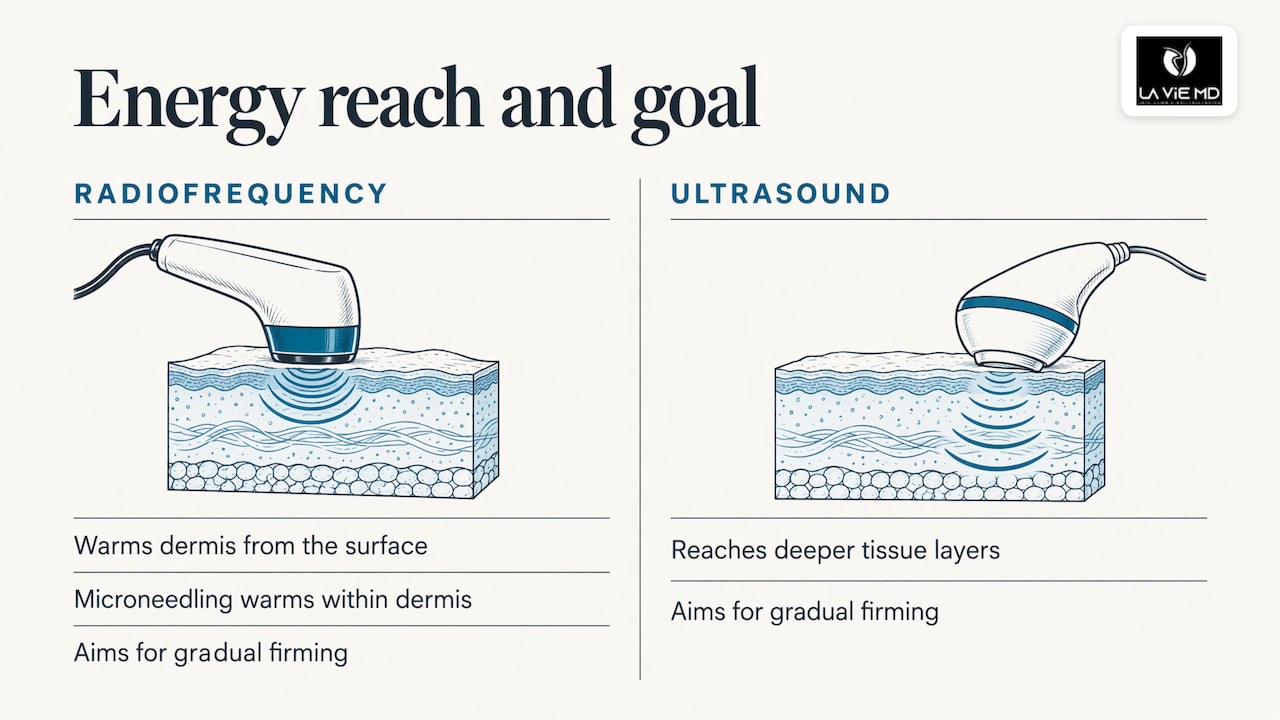
Radiofrequency (RF) warms the dermis from the surface or, with microneedling, from within it. Ultrasound reaches deeper tissue layers. Both aim at the same goal: a gradual firming response rather than an instant lift. At LA ViE MD we offer radiofrequency and ultrasound skin tightening, including Morpheus8 and Forma, and our team builds a plan around where you carry laxity and how much.
Microneedling
Classic microneedling creates tiny channels that prompt collagen remodeling and improves texture and fine crepiness. It is a gentler, more accessible step for mild looseness. If you are curious how adding your own platelets changes the picture, read our guide on microneedling with PRP, and use our microneedling aftercare tips once you are booked.
Laser resurfacing
The AAD calls laser resurfacing the most effective procedure for tightening loose skin, with the trade-off of downtime and a higher risk of side effects such as scarring. Our laser procedures include CO2 resurfacing, and you can compare it with peels in our guide to chemical peel versus laser resurfacing.
Injectables for volume and face
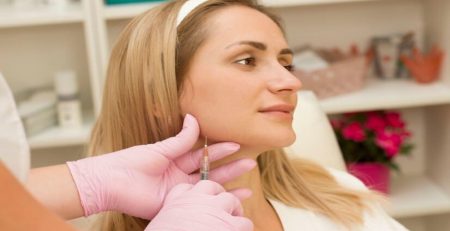
After weight loss, the face often looks more hollow as well as looser. Biostimulators such as Sculptra and dermal fillers replace volume where it has thinned, and they pair well with energy-based tightening. Browse our injectables for the full list.
Safety: choosing who treats you
In October 2025 the FDA issued a safety communication about RF microneedling devices. As summarized by the American Board of Cosmetic Surgery, it describes reported risks including burns, scarring, fat loss, disfigurement and nerve damage, and recommends care from a licensed health care provider with training and experience in the device. Dermatology Times reported that providers can check whether a device is FDA-cleared in the agency’s 510(k) database.
Practical ways to treat that guidance:
- Have a physician evaluate your skin, medical history and goals before any device is used.
- Ask who will perform your treatment and what training they have.
- Tell your provider about medications, recent weight changes, smoking, a history of keloid scarring, and any skin conditions.
- Follow aftercare instructions closely.
At LA ViE MD, treatments take place under the supervision of Dr. Neetu Nebhwani, a board-certified Internal Medicine physician with more than ten years of experience.
When surgery is the realistic answer
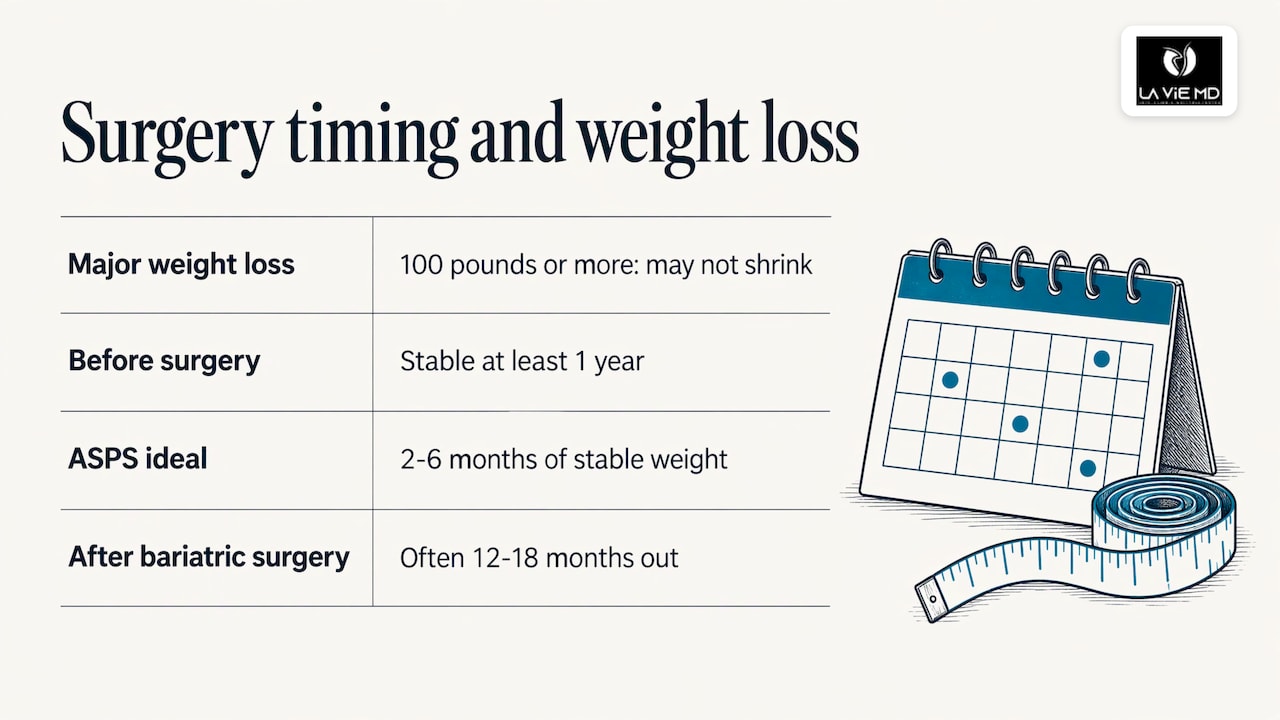
Some situations call for removing skin rather than tightening it. MedlinePlus notes that after losing 100 pounds or more, skin may not be elastic enough to shrink back, and that weight should generally have been stable for at least a year before surgery.
The ASPS practice parameter says body contouring is ideally done after two to six months of stable weight, which after bariatric surgery often falls 12 to 18 months out. It also states that RF and ultrasound have shown minimal effect on excess skin and folds of that magnitude. That is consistent with the sorting table above: the more skin you have, the more a surgeon belongs in your plan.
Excess skin can also cause more than cosmetic concerns. The same ASPS document lists inability to exercise, impaired walking, chronic back, neck and shoulder pain, hygiene difficulty and recurring skin infections or intertrigo. If you have symptoms like these, see your primary care physician or a board-certified plastic surgeon. A panniculectomy may be considered as a functional correction when problems persist despite an adequate trial of non-surgical management.
What surgery involves
The Johns Hopkins Medicine overview of body contouring lists risks including blood clots, wound-healing problems, infection, heavy bleeding, nerve damage, anesthesia complications and lasting pain. Recovery typically means two to four weeks to feel good and about six weeks before returning to the gym, per ASPS figures. Insurance coverage varies and is more likely when there are documented medical problems, so ask your insurer before booking.
A 2023 study of 2,531 bariatric patients found that body contouring did not improve long-term weight loss or maintenance. Its reported benefit is quality of life, which for many people is reason enough.
Perspective from our physician
Patients rarely come in asking about collagen biology. They come in because they worked hard, they feel better, and the mirror has not caught up. We take that seriously.
Our approach starts with an honest exam. Where your skin is mildly to moderately loose, we build a plan that may combine radiofrequency or ultrasound tightening, microneedling, and injectables to restore volume where weight loss has thinned the face. We tailor it to your skin and your goals, because two people who lost the same amount can look very different.
Timing matters too. If you are still losing, we can monitor your progress, support steady weight loss through our GLP-1 management, and start tightening when your skin is ready to respond. Physician supervision is the foundation of everything we do.
Dr N
A sample timeline
Every plan is individual, but a typical path looks like this:
- While losing weight: pace yourself, eat enough protein, add strength training and book a baseline consultation.
- Weight stable for about 3 months: a physician reassesses your skin and discusses treatment options.
- Treatment series: sessions are spaced over weeks, with results building over the following months.
- Maintenance: periodic repeat sessions, skin care at home and continued strength training.
- If laxity remains advanced: a referral conversation about surgical consultation.
Tighten your skin with LA ViE MD
If you are in Danville, Livermore, Dublin or Los Gatos and want a physician’s opinion on your skin, we can look at where you are in the process and what is realistic. Our loose skin tightening page explains our options, and you can see all skin rejuvenation treatments before you come in. If you are still losing weight, ask about our GLP-1 therapy and read about the long-term effects of GLP-1 medications.
Book a consultation through laviemd.us and we will create a plan around your skin concerns and goals.
FAQ
Will losing 50 pounds cause saggy skin?
Not always. Speed, age, genetics and how long you were at your higher weight all play a part. Many people who lose 50 pounds gradually end up with mild to moderate laxity that can be treated non-surgically. A physician exam is the best way to learn where you stand.
What is the best skin tightening treatment after weight loss?
It depends on the amount of loose skin. For mild to moderate laxity, radiofrequency, ultrasound and microneedling are common options. For heavy folds after major weight loss, surgery is the more realistic route. A consultation sorts you into the right category.
How long does skin take to tighten on its own?
Skin can keep improving for roughly 6 to 12 months after your weight stabilizes. Strength training, steady nutrition and not smoking support that process. Many people plan treatments for after that window.
Do skin tightening results last?
Results from non-surgical tightening can last up to a year, and treatment is repeated periodically. Your weight stability, age and lifestyle all affect how long you keep your results. Your provider can set a maintenance schedule.
Sources
- Loose Skin After Weight Loss: What Helps (WebMD)
- Explaining Skin Laxity After Drastic GLP-1 Weight Loss (Medscape)
- Non-Surgical Skin Tightening (American Board of Cosmetic Surgery)
- Many ways to firm sagging skin (American Academy of Dermatology)
- Considering plastic surgery after a large weight loss (MedlinePlus)
- Practice Parameter for Surgical Treatment of Skin Redundancy (ASPS)
- Does Body Contouring Increase Long-Term Weight Loss After Bariatric Surgery (ASPS)
- FDA Alerts Clinicians to Serious Complications with RF Microneedling Devices (Dermatology Times)