Botox for Neck Bands: What It Treats, What to Expect
Botox can soften vertical neck bands when muscle activity is pulling them into view. The FDA approved BOTOX Cosmetic for this use in October 2024. Results appear within days, last about three to four months, and depend heavily on the injector’s technique, because the platysma is a thin muscle sitting above structures you do not want the toxin to reach. At LA ViE MD, Botox is delivered under the supervision of a board-certified physician, Dr. Neetu Nebhwani, and a consultation is where we tell you whether your bands are the kind Botox can improve.
TL;DR
- Botox treats moving platysmal bands: the vertical cords that stand out when you clench your jaw or tense your neck. It is FDA-approved for moderate to severe bands in adults.
- Expect visible softening within days and full effect around two weeks. Plan on about 3 to 4 months per round.
- The neck is a precision area. Dosing and injection depth matter, and the label carries a boxed warning about toxin spreading.
- Bands caused by loose skin, fat or fascia weakening may need a different or combined plan, such as skin tightening or a non-surgical neck lift.
- A consultation with a physician-led team is the fastest way to know which group you are in.
Table of Contents
- What neck bands are and why they appear
- Does Botox work for neck bands?
- What happens during the treatment
- Timeline: when you will see results and how long they last
- Safety: what to know before you book
- Is neck Botox worth it? Who gets the most from it
- When Botox is combined with other treatments
- How much does Botox for neck bands cost?
- Perspective
- Book a neck consultation
- FAQ
- Sources
What neck bands are and why they appear
The platysma is a thin, wide sheet of muscle running from the lower face down across the neck. When it contracts, you may see two vertical cords below the chin, sometimes more. Those are platysmal bands. They tend to show up as we age, and they become most obvious when you speak, smile, or strain.
Researchers writing in Plastic and Reconstructive Surgery Global Open describe the likely cause as age-related weakening of the cervical fascia, the connective tissue layer of the neck, which lets structures from deeper in the neck bulge forward. The same authors stress that a full facial analysis and realistic expectations are what make patients happy with the result.
That detail matters for you. There are two broad pictures:
- Dynamic bands: they pop out mainly when the muscle is working. Relaxing the muscle changes what you see.
- Static bands: they are visible at rest, often alongside loose skin, fullness under the chin or a softer jawline. Relaxing the muscle helps less on its own.
Most people have a mix, which is why the assessment comes before the syringe.
Does Botox work for neck bands?
Yes, for the right bands. BOTOX Cosmetic is indicated for temporary improvement in moderate to severe platysma bands associated with platysma muscle activity in adults, per the manufacturer’s announcement of FDA approval on October 18, 2024.
In two Phase III trials, 32% and 31% of treated patients improved by at least two grades on a band severity scale at day 14, compared with 2% and 0% on placebo. That scale runs from 1 (no visible bands) to 5 (three or more visible bands affecting jawline definition), and the approved indication covers the moderate to severe range.
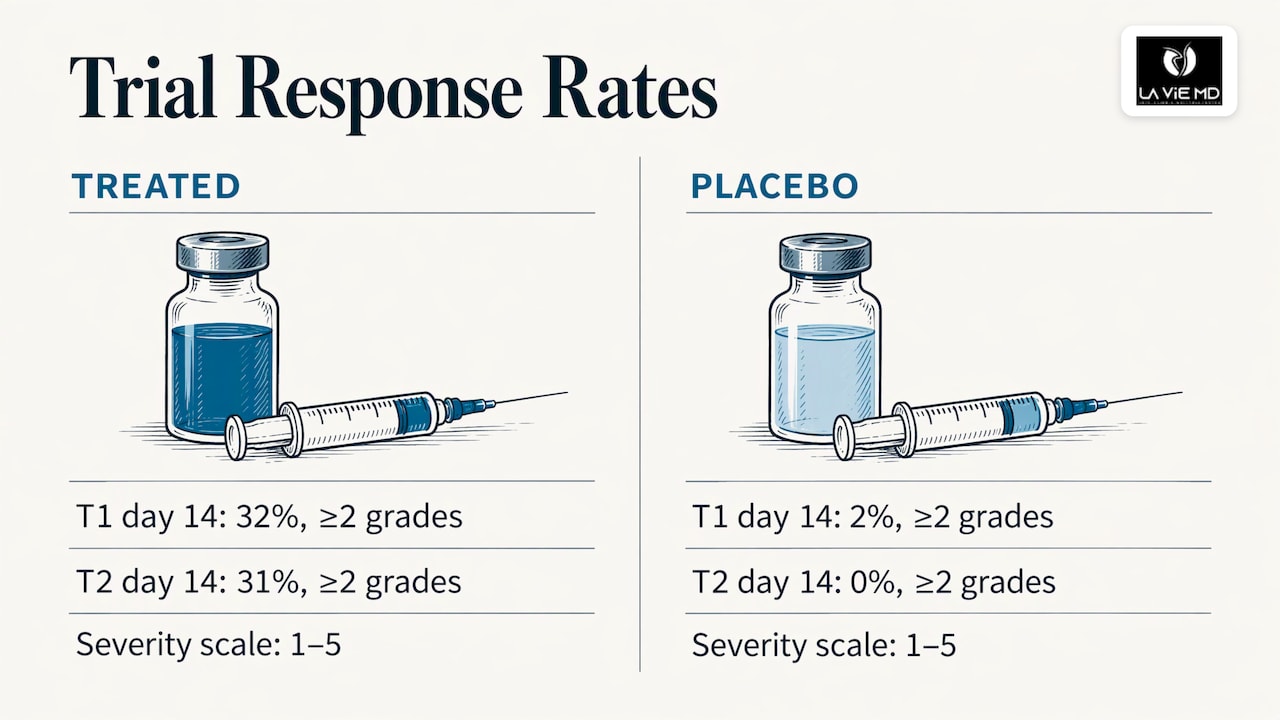
Those trial numbers use a strict yardstick, a two-grade jump. A systematic review of 78 patients who received botulinum toxin for platysma bands measured a mean improvement of 2.0 points and a 93.7% response rate at about two weeks. At three months the mean improvement was 1.2 points with an 86% response rate.
In plain terms: if your bands tighten when you move and relax when you are still, you are a good candidate to discuss. If they are there at rest, or your main concern is loose skin, Botox is one part of the plan rather than the whole plan.
What happens during the treatment
The visit is short and needs no recovery period. The technique is where quality shows.
According to the FDA prescribing information, treatment uses:
- 2 Units into each of 4 upper-platysma sites below the jawline on each side
- 1 Unit into 5 sites along each vertical band
- A total of 26, 31 or 36 Units depending on how the bands present
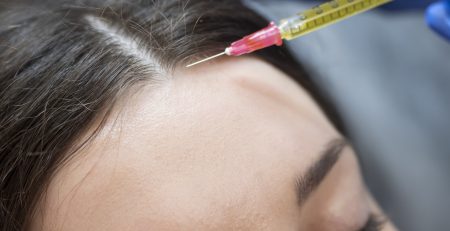
Injections are superficial and intramuscular, at least 1 cm below the lower edge of the jawbone, with the band pinched to isolate the muscle. Dosing more often than every three months has not been clinically evaluated.
The pinch is not a detail. Writers in the Journal of Drugs in Dermatology explain that the platysma is thin and injected toxin can diffuse into deeper structures, including the larynx, the swallowing muscles and the neck flexors. They recommend lifting the band away with a pinch before a superficial injection. The 2020 review by Rohrich and colleagues makes the same point: grasp and distract the bands before injecting to avoid complications such as difficulty swallowing.
This is why we see neck Botox as a medical procedure, not a quick add-on to a forehead appointment. Our injections are performed under physician supervision, with dosing set for your anatomy and not a template.
Timeline: when you will see results and how long they last
The manufacturer’s FAQ says results for vertical neck bands should begin in 1 to 2 days, with full results at 14 days, and that treatments should be spaced at least 90 days apart. The Journal of Drugs in Dermatology puts the average duration at 3 to 4 months in most treated regions.
A realistic calendar looks like this:
| When | What you notice |
|---|---|
| Day of treatment | Tiny injection marks; you can go back to your day |
| Days 1 to 3 | Early softening as the muscle starts to relax |
| Day 14 | Full effect, the right time for any touch-up conversation |
| Months 3 to 4 | Movement gradually returns; time to plan the next round |
Because the effect is temporary, neck Botox works best as a maintenance routine. Many patients pair the appointment with other injectables, which saves a visit and lets the physician look at the whole face and neck together.
Safety: what to know before you book
The safety information is the part to read closely.
Boxed warning. The FDA label carries a boxed warning on spread of toxin effects. Swallowing and breathing difficulties can be life-threatening, and there have been reports of death related to spread of toxin effects. If you have trouble swallowing, speaking or breathing after any botulinum toxin treatment, seek immediate medical care. The label also advises caution in patients with pre-existing cardiovascular disease, so tell your physician about your heart history.
Trial safety. Safety for platysma bands was evaluated in two double-blind, placebo-controlled trials with 407 treated subjects and 425 placebo subjects, and the profile was consistent with the known profile of BOTOX Cosmetic for other uses, per the prescribing information.
Common side effects. The manufacturer’s FAQ lists dry mouth, injection-site discomfort, tiredness, headache, neck pain and eye problems such as double vision, blurred vision or drooping eyelids. It also says there has been no confirmed serious case of toxin spread when BOTOX Cosmetic was used at the recommended dose for frown lines, crow’s feet, forehead lines or platysma bands.
Dose discipline. The dermatology literature raises concern with high-end dosing for severe bands. Swallowing difficulty and neck flexor weakness have been reported at doses above 75 units, and one report described severe swallowing difficulty after 60 units that required tube feeding for six weeks, according to the Journal of Drugs in Dermatology. The practical lesson for you: the dose should be conservative and set by a physician who knows neck anatomy, with touch-ups added only if needed after the two-week mark.
Tell the physician before treatment about any neuromuscular condition, current medications, pregnancy or breastfeeding, and any prior reaction to a botulinum toxin.
Is neck Botox worth it? Who gets the most from it
You are likely to be happy if:
- Your bands are most visible when you talk, clench or tense your neck.
- Your skin quality in the neck is still fairly good.
- You want a no-downtime option and accept a repeat treatment every few months.
- You value a natural result: smoother lines and a cleaner jaw-to-neck transition rather than a frozen look.
You may want a bigger plan if:
- Bands are visible at rest.
- You have crepey or loose neck skin.
- You notice fullness under the chin or a softening jawline.
The Rohrich review makes the case for this kind of systematic assessment before choosing a nonsurgical plan. It is also why our approach starts with your concerns and goals, then builds a custom plan.
When Botox is combined with other treatments
Neck bands rarely live alone. Depending on what the exam shows, a plan can include:
- Skin tightening. Radiofrequency microneedling such as Morpheus8 targets laxity and texture, which Botox does not address.
- Submental fullness. If a heavy area under the chin is part of the picture, see our guide to Kybella for a double chin.
- Jawline definition. Neck Botox and masseter Botox for jaw slimming are different treatments with different goals, and some patients benefit from looking at both.
- A combined approach. Our non-surgical neck lift page explains how we layer treatments to refine the neck without surgery.
The point is sequencing. Relaxing the muscle first can reveal what remains, and then tightening or contouring is chosen for what is left, not guessed up front.
How much does Botox for neck bands cost?
Price depends on the units used, so it varies by person. The American Society of Plastic Surgeons reports an average botulinum toxin cost of $435, and says the fee varies with the severity of lines, the amount of product, the provider’s expertise and qualifications, the time required and the office location. The neck uses its own dosing pattern, so your quote will reflect your band presentation.
The ASPS also notes that botulinum toxin fees are generally much lower than skin resurfacing, at roughly 24 percent of the average resurfacing fee. Because it is repeated a few times a year, think in annual terms when you budget.
We do not publish a neck Botox price, because the number comes from your consultation. We confirm pricing before treatment so there are no surprises.
Perspective
Neck Botox is a good example of why we believe aesthetic medicine should be physician-led. The bands look simple on the surface, but the muscle is thin and the neighboring structures matter.
What we want every patient to leave a consultation with is clarity: are these dynamic bands that Botox can soften, or is the real story skin laxity, fullness or a weakening jawline? Sometimes the answer is Botox alone. More often it is Botox as one piece of a custom plan, which may include skin tightening or contouring.
We would rather build the plan around your neck, your goals and your timeline than around a standard number of units. Small, careful dosing, a clear follow-up at two weeks and a maintenance schedule you can plan around: that is the experience we design for our patients in Danville, Livermore, Dublin and Los Gatos.
Dr N
Book a neck consultation
If you are in Danville, Livermore, Dublin or Los Gatos and want to know whether Botox will smooth your neck bands, start with a physician consultation. We examine how your neck moves, discuss your goals and lay out a plan with Botox, tightening or both. Browse our Botox and injectables, or see the location page for Livermore, Dublin or Los Gatos.

Curious how Botox compares with other neurotoxins? Our guide to Botox, Dysport, Xeomin and Daxxify walks through the differences. You can also read how Botox compares with fillers if you are weighing options for the lower face.
FAQ
Does Botox work for neck bands?
Yes, when the bands are driven by platysma muscle activity. The FDA approved BOTOX Cosmetic for moderate to severe platysma bands in adults in October 2024. Bands that are visible at rest or tied to loose skin may respond only partly and often need a combined plan.
How long does neck Botox last?
Most people see the effect for about 3 to 4 months. It starts within a couple of days and is complete by around day 14. The label states that dosing more often than every three months has not been clinically evaluated.
Is Botox in the neck safe?
When it is given at the recommended dose by a trained injector, the manufacturer reports no confirmed serious case of toxin spread for platysma bands. The FDA label still carries a boxed warning about spread, so seek immediate care for trouble swallowing, speaking or breathing. Dose and technique are the main safety levers, which is why a physician should oversee it.
How many units of Botox go into neck bands?
The FDA prescribing information describes 26, 31 or 36 Units, depending on how the bands present. Published reviews describe higher totals in practice, but the dermatology literature urges caution with high doses. Your physician sets the number after examining your neck.
How much does Botox for neck bands cost?
It depends on the units, the provider and the region. The ASPS reports an average botulinum toxin cost of $435 across treatments. Your own quote comes at a consultation.
Sources
- Effective Treatment of Platysma Bands with Neurotoxin (PMC, 2020)
- BOTOX Cosmetic FDA approval announcement, October 18, 2024
- BOTOX Cosmetic prescribing information, FDA, 10/2024
- Botulinum Toxin Treatment for Mild to Moderate Platysma Bands, systematic review
- Botulinum Toxin-A Chemical Denervation for Platysmal Bands, Journal of Drugs in Dermatology
- BOTOX Cosmetic FAQs
- Botulinum Toxin Cost, American Society of Plastic Surgeons
- More than a wrinkle reducer, American Society of Plastic Surgeons