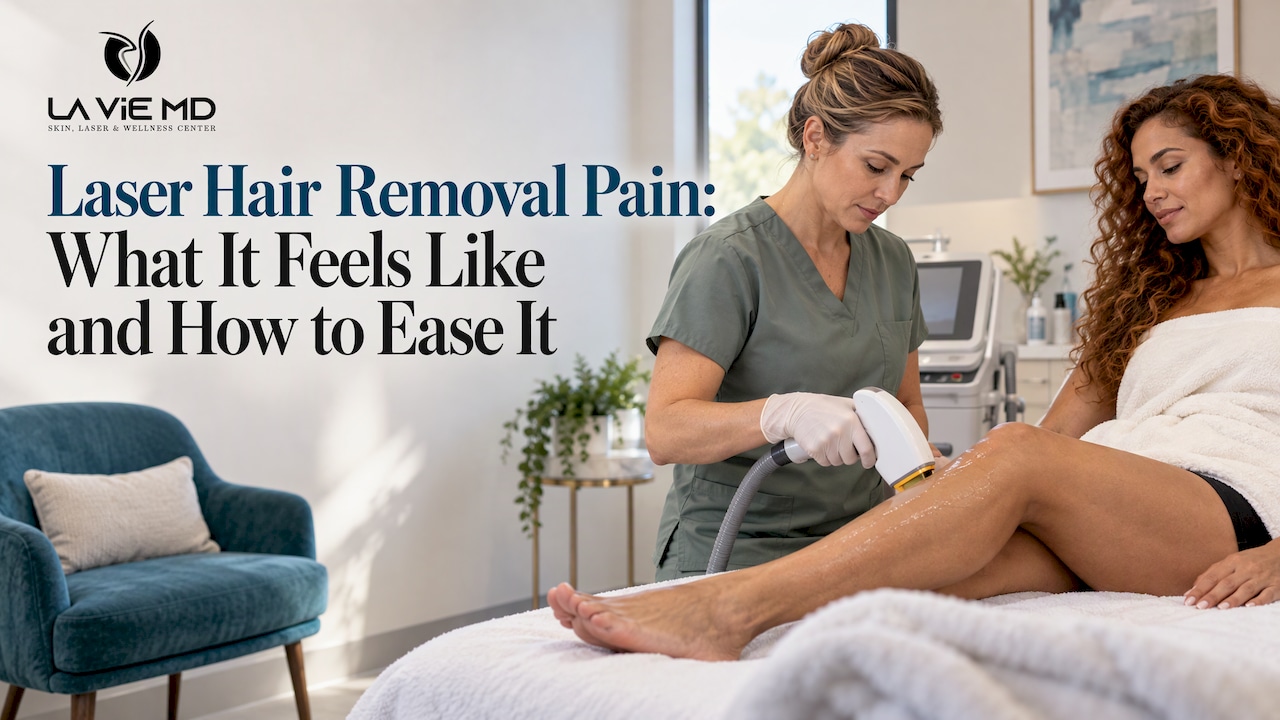
Laser Hair Removal Pain: What It Feels Like and How to Ease It
Yes, laser hair removal can hurt, but for most people it is a brief, manageable discomfort and not true pain. The American Academy of Dermatology describes the pulses as warm pinpricks or a rubber band snapped against the skin. How much you feel depends on the area treated, the laser used, your hair and skin, and how well the session is prepared and run. Below you will find what to expect during and after a session, where it stings most, and the steps that make treatment more comfortable.
TL;DR
- Expect quick snaps or pinpricks with a warm sensation, not a lingering ache. Most people find it tolerable.
- Thin or sensitive skin, such as the upper lip and bikini line, tends to feel sharper than the cheeks, forehead or legs.
- Redness and swelling after a session usually look like a mild sunburn, and common side effects are minor and last 1 to 3 days.
- Laser settings, spot size, wavelength and your provider’s experience all change how a session feels, so choose a medically supervised clinic and speak up during treatment.
- Good prep (a clean shave as instructed, sun protection, cooling and clear communication) is the simplest way to reduce discomfort.
Table of Contents
- What laser hair removal actually feels like
- Which areas hurt the most
- Why the same treatment feels different from person to person
- Laser hair removal vs. waxing: which hurts more?
- How to make laser hair removal more comfortable
- What to expect after the session
- Does it hurt less after the first session?
- Our perspective on laser hair removal comfort
- Choosing a clinic that takes comfort seriously
- Laser hair removal with LA ViE MD
- Frequently asked questions
- Sources
What laser hair removal actually feels like
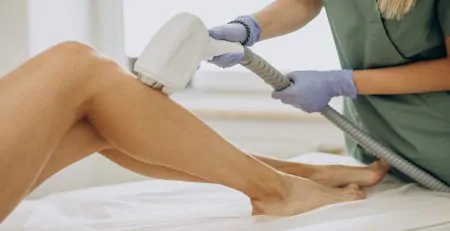
A laser hair removal device sends pulses of light into the skin. The pigment in each hair absorbs that light and turns it into heat, which disables the follicle. That heat is what you feel, and it is brief. Each pulse lasts a fraction of a second, so the sensation arrives and fades almost at once.
People describe it in a few consistent ways:
- A rubber band snap. This is the comparison clinicians use most often, and the AAD uses it too.
- Warm pinpricks. Fine, hot little pricks across the area, especially where hair is thick.
- A wave of warmth. On areas with sparse or fine hair, many people feel mostly warmth and little else.
- A brief electric zing. Some people feel it this way over bony areas or very coarse hair.
The sensation is not constant. You feel each pulse, then a pause while the provider moves the handpiece. A small area such as the underarms can be done in minutes. Larger areas such as the legs or back take longer, so you are dealing with a series of short stings spread across more time.
It also helps to know why hair thickness matters. Dark, coarse hair carries more pigment, so it absorbs more energy and can feel stronger. Finer or lighter hair absorbs less. Skin tone matters too, because the laser has to be matched to your skin and hair combination. That is why the person holding the device matters as much as the device itself. The Mayo Clinic notes that choosing a professional experienced in treating different skin colors helps safety and results.
Which areas hurt the most
No two bodies rate the same, but there are patterns. The general rule is that pain follows skin thickness, hair density and how close the skin sits to bone or nerve endings.
| Area | What most people report |
|---|---|
| Cheeks and forehead | Mild. Healthline notes that pain tends to be mild here. |
| Upper lip | Often the sharpest facial area, because the skin is thin. The same Healthline article says it tends to be more painful. |
| Underarms | Noticeable, since hair is dense and coarse, but the area is small and quick. |
| Bikini line and Brazilian | Sensitive skin and coarse hair. Said to feel similar to waxing but takes longer. |
| Legs | Usually moderate. Shins can feel sharper over bone, calves and thighs are usually easier. |
| Arms | Typically on the milder side. |
| Back and stomach | Mild to moderate, depending on hair density. Large areas mean a longer session. |
Treatment is possible on nearly every body area. Dermatologist Dr. Kim Nichols has said that pretty much any area is fair game except in or around an orifice, so you are not limited to the easy spots. If you plan to treat a sensitive area, tell your provider so the approach can be planned around it.
Men and larger areas
Men often treat the back, chest and shoulders, where hair is dense and the surface is large. The discomfort per pulse is similar to any other area, but sessions run longer. If that is you, our guide to laser hair removal for men covers what to expect in more detail.
Why the same treatment feels different from person to person
Pain is not only about your pain tolerance. The device and the settings play a large part.
A controlled study comparing anesthetic approaches for laser hair removal found that laser characteristics affected how painful treatment felt. At identical energy levels, a larger spot size (12 mm) caused more pain than a smaller one (8 mm), and an 800 nm diode laser caused more discomfort than a 755 nm alexandrite laser. That study is from 2000, and equipment has changed since, but the principle holds: technology and settings shape the experience.
Other factors you can influence or discuss with your provider:
- Hair and skin contrast. The more pigment in the hair, the more heat it absorbs.
- Treatment area. Thin skin and nerve-rich zones feel sharper.
- Skin condition on the day. Sunburned, irritated or freshly tanned skin is more sensitive and may need to be treated later.
- Hormonal timing. Many people find they are more sensitive at certain points in their cycle. If you notice this, schedule around it.
- Stress and sleep. A tense body registers more discomfort. A calm start helps.
- Provider technique. Pulse placement, cooling and pacing all affect comfort, and an experienced practitioner adjusts as they see your reactions.
Laser hair removal vs. waxing: which hurts more?
Most people who have done both say laser is easier to tolerate per session, because there is no ripping of hair from the root and no sticky residue on irritated skin. The sensation is a snap rather than a pull. The trade-off is time: on larger areas a laser session takes longer than a single wax, and bikini-area treatment is said to feel similar to waxing but takes longer.
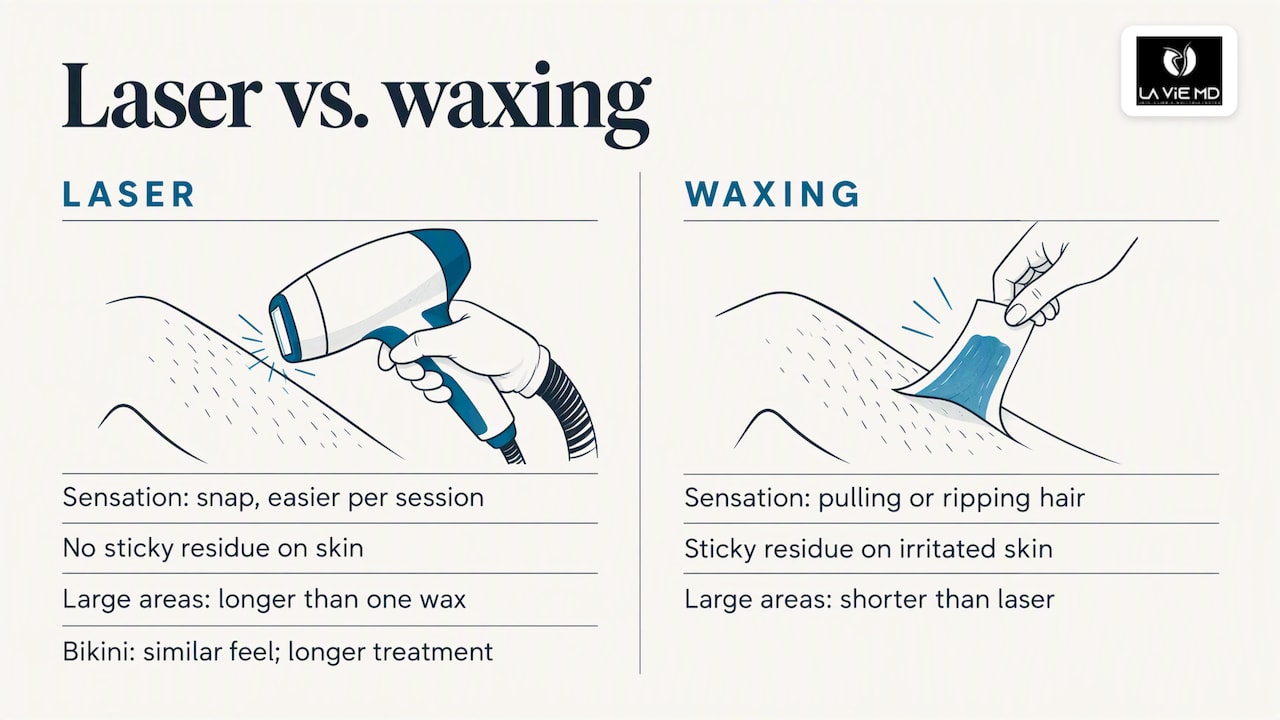
The real difference shows up over months. Waxing hurts about the same every time and the hair keeps returning. Laser treatment is a course of sessions, and as the hair thins and grows back finer, many people find it gets easier. If you are weighing how many visits you will need, see our breakdown of how many laser hair removal sessions are typical.
How to make laser hair removal more comfortable
You have more control than you might think. These steps are the ones we ask our clients to follow.
Before your appointment
- Shave as your provider instructs. Laser works on the hair in the follicle, so the surface hair should be trimmed to stubble level. The Mayo Clinic says your professional may ask you to shave the treatment area the day before. Follow the instruction your clinic gives you, rather than shaving right before you walk in with a fresh razor burn.
- Do not wax or pluck beforehand unless told it is fine. These remove the hair root the laser needs to target. Ask your clinic how long to avoid them.
- Stay out of the sun. Protect treated areas from sun exposure before and after treatment. Tanned or burned skin is more sensitive and more prone to side effects.
- Skip irritating products. Avoid scrubs, strong exfoliants and retinoid-type products on the area unless your provider says otherwise.
- Eat, hydrate and sleep. It sounds basic, and it works. A rested, fed body handles the sensations better.
On the day
- Arrive with clean, dry skin. No lotion, oil or deodorant on the area.
- Tell your provider what you feel. If a setting is too strong, say so. A good clinician would rather adjust than have you tense up through a session.
- Ask about cooling. Many devices pair the pulse with skin cooling, and a provider can add more cooling where you need it.
- Ask about numbing options. Topical anesthetics have been studied for laser hair removal. Whether one suits you is a medical decision, so ask your provider which product, if any, is appropriate and when to apply it. Do not use numbing products over large areas on your own.
- Breathe slowly. Exhale as each pulse lands. It is a small habit with a real calming effect.
- Start with an easy area if you are nervous. Building confidence on forearms or legs before moving to a sensitive zone can make the whole course feel simpler.
Right after
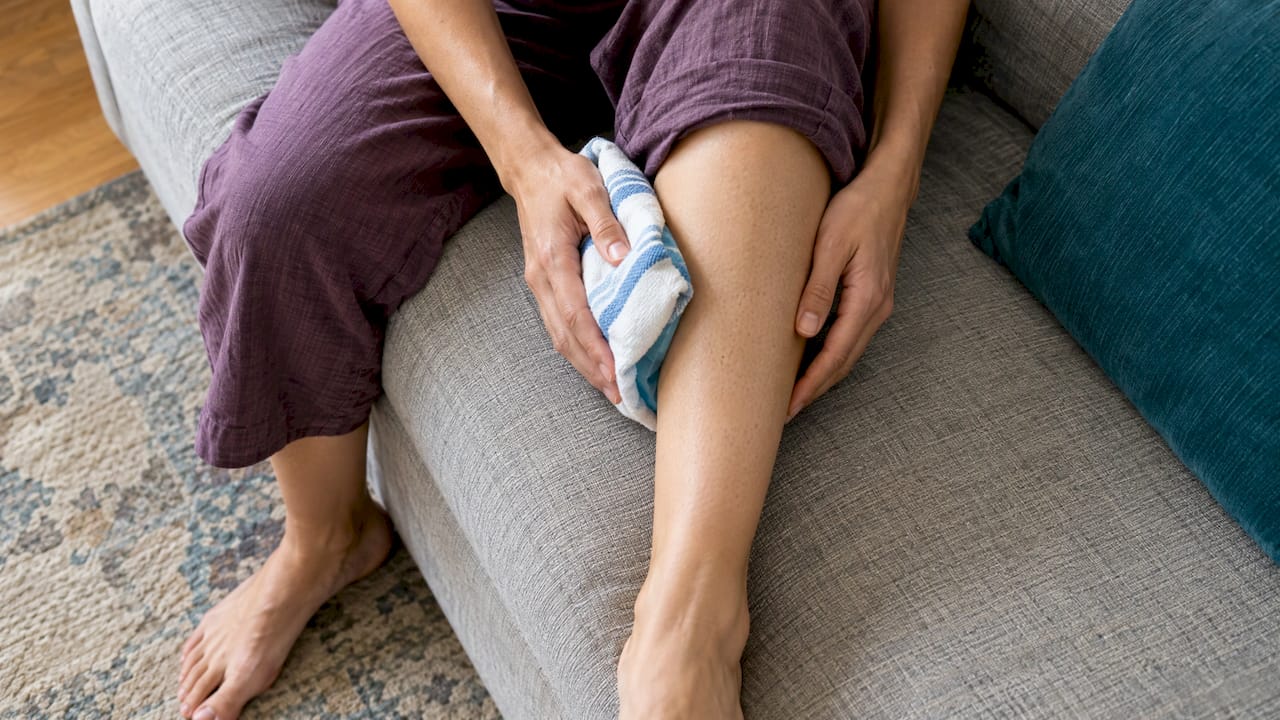
Cooling helps. The Mayo Clinic suggests applying ice packs to the treated area to ease discomfort. Wrap the ice in a cloth so it does not sit directly on the skin. Keep the area clean and out of the sun, and wear loose clothing over it.
What to expect after the session
Immediately after, the area often looks pink or red, and small bumps around each follicle are common. It can feel like a mild sunburn. The AAD says common side effects, including discomfort, swelling and redness, are minor and last 1 to 3 days.
You might notice:
- Warmth or tenderness, like a light sunburn
- Slight puffiness around hair follicles
- Dry or slightly tight skin
If you get a stronger skin reaction right after the procedure, your healthcare professional may apply a steroid cream. Contact your provider if redness, swelling or pain is more intense than you were told to expect, if you see blistering, or if symptoms are not settling in the days that follow. Do not treat a strong reaction on your own with products you have not checked with them.
For day-by-day guidance, our list of skin care tips after laser hair removal walks through what to do and what to avoid while the skin settles.
Does it hurt less after the first session?
For many people, yes. Each session weakens the follicles it reaches, and the hair that regrows tends to be finer and sparser. Finer hair carries less pigment, so there is less heat to feel. People often report that early sessions feel the sharpest, particularly on coarse hair, and later ones are gentler.
That is a common pattern, not a promise. Your experience will still depend on the area, your skin that day, and the settings used. What we can say is that you are not signing up for the same intensity at every visit, and you can raise comfort concerns at any session. If you want a fuller look at how treatment unfolds, our 7 facts about body laser hair treatment is a good next read.
Our perspective on laser hair removal comfort
Comfort is part of the treatment plan, not an afterthought. When someone tells us they are nervous about pain, we take it seriously, because a client who is relaxed is easier to treat well and more likely to finish the full course.
At LA ViE MD, laser hair removal is performed in a medical setting under physician supervision. That matters for pain because the details that shape how a session feels are medical ones: your skin type, your hair color and thickness, the settings chosen for each area, and how your skin reacts in the first minutes. We build a treatment plan around those details instead of running every client through the same program.
Our advice is simple. Come prepared, tell us honestly what you feel, and do not tough it out in silence. We would rather adjust the approach mid-session than have you dread the next one. Most people who worry beforehand are surprised by how quickly each area is done.
Dr N
Choosing a clinic that takes comfort seriously
Before booking, ask a few direct questions. The answers tell you a lot about how your sessions will feel.
- Who performs the treatment, and who supervises? Medical oversight means someone can assess your skin and manage any reaction.
- How is my skin and hair type assessed? The device and settings should be chosen for you, not set by default.
- What cooling is used? Ask how the area is protected during each pulse.
- What happens if it is too uncomfortable? You want a provider who will pause, adjust settings or change approach.
- What aftercare will I get? Written instructions and a clear way to reach the clinic if something looks off.
- Is a test patch available? Trying a small area first lets you gauge sensation before committing to a large one.
Season can also play a role in comfort, since less sun exposure means less tanned skin. Our piece on laser hair removal in winter explains why the cooler months are a popular time to begin.
Laser hair removal with LA ViE MD
We offer laser hair removal for clients in Danville, Livermore, Dublin and Los Gatos, with every plan designed around your skin, your hair and the areas you want treated. Our team and physician-led approach are built to keep treatment safe and as comfortable as possible, and you can talk through any pain concerns at your consultation before a single pulse is fired.
See our laser procedures page for the full list, or read about laser hair removal in Livermore. If you have questions first, our laser hair removal FAQs cover the most common ones. Prices are discussed at consultation, since a plan depends on the areas you choose.

Ready to find out how it feels for you? Book a consultation through LA ViE MD and tell us which area worries you most. We will start there.
Frequently asked questions
Where is the most painful place to get laser hair removal?
The thin, sensitive skin of the upper lip is often cited as the sharpest facial area, and the bikini line is another common one. Underarms can also feel intense because the hair is dense. Cheeks, forehead, arms and legs are usually milder, though shins over bone can sting more than calves.
Can I shave right before my laser appointment?
Follow your clinic’s instructions. The Mayo Clinic says a professional may ask you to shave the day before. Shaving removes the surface hair so the laser energy reaches the follicle instead of burning hair above the skin, but a fresh razor burn makes skin more sensitive. If you are unsure, ask when you book.
Does laser hair removal hurt more than waxing?
For most people, each pulse is quicker and less harsh than a wax strip, though the experience is not identical. On the bikini line, laser is said to feel similar to waxing but takes longer. Over a full course of treatment, laser tends to get easier as hair thins, while waxing stays about the same each time.
How long does soreness last after laser hair removal?
Common side effects such as discomfort, swelling and redness are minor and typically last 1 to 3 days. Cool compresses and sun protection help. If a reaction is stronger than expected, contact your provider, who may recommend a treatment such as a steroid cream.
Can I make laser hair removal completely painless?
Not reliably, and it is better to plan for mild discomfort than to expect none. You can reduce it with good prep, cooling, suitable equipment and a skilled provider who adjusts to your feedback. Ask your clinic whether a numbing product is appropriate for you.
Sources
- Laser hair removal: FAQs, American Academy of Dermatology
- Laser hair removal, Mayo Clinic
- Topical anesthesia for laser hair removal: comparison study, PubMed
- Does Laser Hair Removal Hurt? Tolerating the Procedure, Healthline
- How Laser Hair Removal Feels on Every Body Part, Teen Vogue