Under Eye Hollows Treatment: Options That Restore Volume
The most direct treatment for under eye hollows is a soft hyaluronic acid (HA) filler placed by an experienced injector, often combined with filler in the cheek when volume loss there is pulling the under-eye area down. It replaces lost volume right away, it can be repeated, and it can be dissolved if needed. It is not the right answer for every kind of under-eye concern, though. Hollows, puffy fat bags, loose skin and pigment all look “tired,” and each one calls for a different plan. This guide explains how to tell them apart, what your options are, what recovery looks like and what to ask before you book.
TL;DR
- Under eye hollows are depressions (often called tear troughs) that cast a shadow. They are caused by volume loss, bone structure and thinning skin, not just lack of sleep.
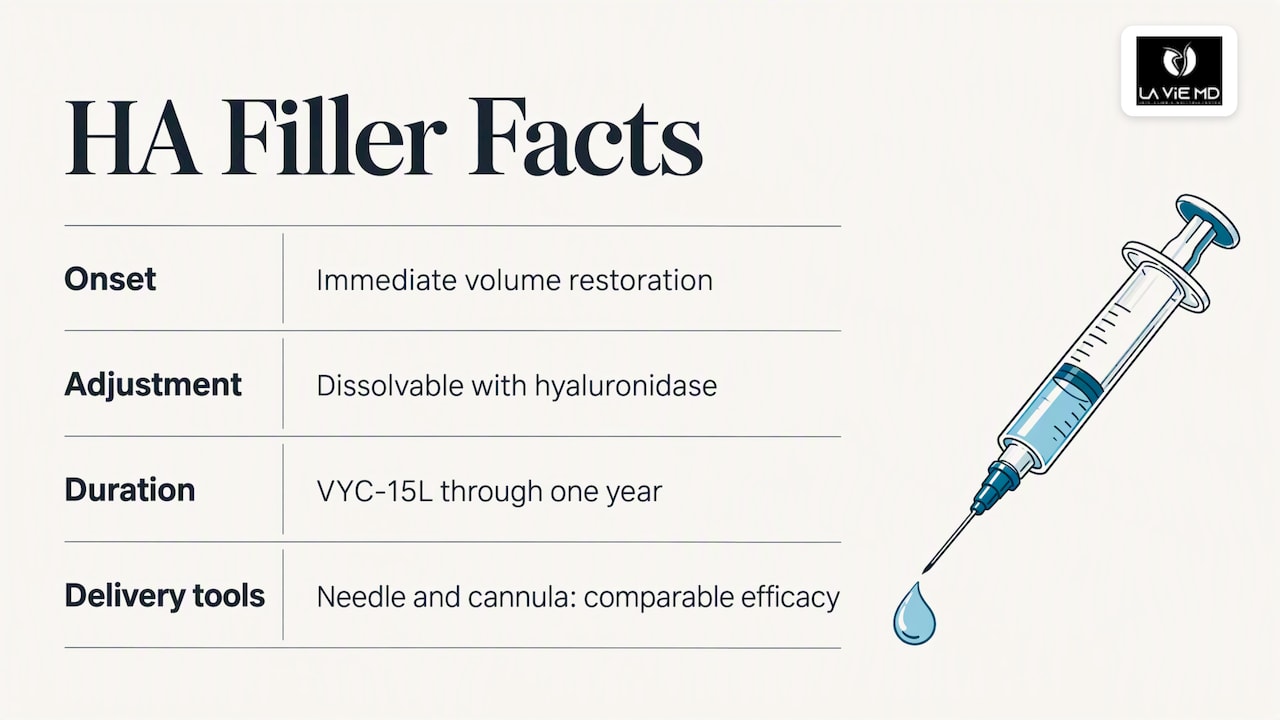
- HA filler is the most common nonsurgical way to restore volume under the eyes. Results show immediately, and the filler can be dissolved with hyaluronidase if needed.
- In a 2021 randomized study, correction of infraorbital hollowing with an HA filler lasted through one year.
- Candidates with mild to moderate hollows and little fat bulging tend to do best. Significant fat prolapse or loose skin may need a different approach.
- A medical consultation comes first, because this area is anatomically complex and the treatment plan depends on your cause.
Table of Contents
- What actually causes under eye hollows
- Can under eye hollows be reversed?
- Treatment options that restore volume under the eyes
- Who is a good candidate
- A typical visit, step by step
- Risks and safe use
- What does it cost?
- Is there a permanent fix?
- What you can do at home
- Perspective
- Treatment at LA ViE MD
- How to prepare and what to expect afterward
- How to choose a provider
- FAQ
- Sources
What actually causes under eye hollows
A hollow is a depression, and the shadow it casts is what makes the area look dark and tired. A 2023 review of infraorbital hollow rejuvenation lists several contributors:
- Underdevelopment of the cheekbone (maxilla) area, which you may have had since your twenties or earlier
- Age-related loss of fat under the skin
- Descent of the superficial fat pads of the face
- Thinning skin over the rim of the eye socket
- Resorption of the orbital bone over time
Most people have more than one of these at work. That is why two people with the same “hollow” can need different treatment, and why a single syringe is not a universal answer.
Hollows, dark circles, puffiness and loose skin
People often use one phrase for four different things. Here is how they separate.
| Concern | What you see | Main driver |
|---|---|---|
| Hollow (tear trough) | A groove or dent running from the inner corner of the eye toward the cheek, with a shadow in it | Volume loss, bone structure, thin skin |
| Fat bag | A bulge sitting above the hollow, near the lower lid | Orbital fat protruding forward |
| Fluid puffiness | A diffuse swelling, not divided into compartments, that can worsen with allergies or salty meals | Fluid retention |
| Pigment or vessels | A bluish or brownish tint to the skin itself | Pigmentation, visible blood vessels, thin skin |
The distinction between fat and fluid bags comes from an academic paper on under-eye anatomy: fat bags sit above the orbital rim hollow, while fluid bags are diffuse and not compartmentalized. The same source notes that tear trough hollows are depressions in their own right.
A simple self-check: stand in front of a mirror under overhead light, then tilt your face up toward a window. If the dark area mostly lightens when the light hits it from above, shadow from a hollow is likely the main issue. If it stays dark, pigment or thin skin is more likely involved. Neither test replaces an exam, but it gives you a useful thing to describe at a consultation.
Can under eye hollows be reversed?
The honest answer is that they can be corrected visibly, and the correction depends on the cause. HA fillers can provide immediate volume restoration and be repeated if needed, and the review is clear that the strategy depends on what is creating the hollow.
That is why a good plan often looks at the whole midface rather than a single groove. When cheek volume has dropped, the tissue above it slides down and deepens the under-eye shadow. Restoring support in the cheek can soften the hollow, sometimes with less product placed right under the eye. The review describes midface fillers as able to improve the appearance of infraorbital hollows.
So “reversed” is best understood as “restored and maintained.” Your face continues to age, and treatment is a way of managing volume over time.
Treatment options that restore volume under the eyes
Hyaluronic acid filler
HA filler is the first-line nonsurgical option. The 2023 review describes HA fillers as minimally invasive, immediate in results and dissolvable with hyaluronidase. That last point matters: if you or your provider are not happy with the result, it can be adjusted. A soft, low-swelling HA product is typically chosen for this thin-skinned area, and it is placed in small amounts.
On duration, a 2021 prospective, multicenter, randomized study found that VYC-15L correction of infraorbital hollowing lasted through one year. Individual results vary with the product, the amount, your metabolism and your anatomy.
On technique, a 2024 randomized, evaluator-blinded study found comparable efficacy with needle and cannula administration, with reassuring safety outcomes. In practice, the choice of tool matters less than the injector’s knowledge of the anatomy.
You can read how we approach this at our undereye filler page, and see the broader range of products on our dermal fillers page.
Midface volume restoration
If your cheeks have flattened, filler placed there can lift and support the lower eyelid region. Some patients are surprised that the first treatment is not under the eye at all. The goal is a smooth transition from lid to cheek, which is what looks natural in photos and in person.
Collagen-stimulating treatments
Fillers add volume directly. Biostimulators work differently, encouraging your skin to build structure over several weeks. They are generally used for broader volume and skin quality rather than a tight tear trough groove. Our guide to Sculptra and fillers explains how the two approaches differ and when they are combined.
Skin quality treatments
When thin or crepey skin is part of the picture, volume alone does not finish the job. Radiofrequency microneedling such as Morpheus8, and medical-grade facials, are used for texture and firmness, and PicoWay is used for pigmentation concerns. We offer these on our skin rejuvenation page and laser procedures page. The right combination is decided after an exam, not before.
Surgical options
For fat bags or significant loose skin, surgery may be a better match. The research describes lower-eyelid fat transposition or fat injections among the surgical approaches, and notes that severe laxity or fat prolapse may be better addressed with blepharoplasty. A frank consultation will tell you which category you fall in.
Who is a good candidate
According to the same review, ideal filler candidates generally have minimal orbital fat protrusion and mild to moderate tear troughs. In practice, you are likely to be a good fit if:
- You see a defined groove or shadow rather than a prominent bulge
- Your skin under the eye is not heavily lax
- Your concern is worse in overhead light or later in the day
- You want a change that is gradual and adjustable
If a bag sits above the groove, filler placed in the groove can sometimes make the contrast more obvious. This is why the exam matters before any needle is involved.
A typical visit, step by step
- Consultation and facial assessment. We look at the under-eye area, cheeks and the way light falls on your face, and discuss your goals.
- Planning. Together we decide whether to treat the tear trough, the cheek, or both, and whether skin treatments belong in the plan.
- Preparation. The area is cleansed and, where appropriate, numbed.
- Injection. Small amounts of filler are placed slowly and checked as we go.
- Aftercare. You get written instructions on activity, makeup and what to watch for.
Most people go straight back to normal routines, though bruising can mean you want a day or two of lighter plans if you have an event coming.
Risks and safe use
The under-eye region is delicate, so safety is the main reason to choose a medical setting.
Common effects. Tenderness, bruising and swelling are the usual reactions after HA injections in this area, and in clinical studies they typically resolved within one to two weeks.
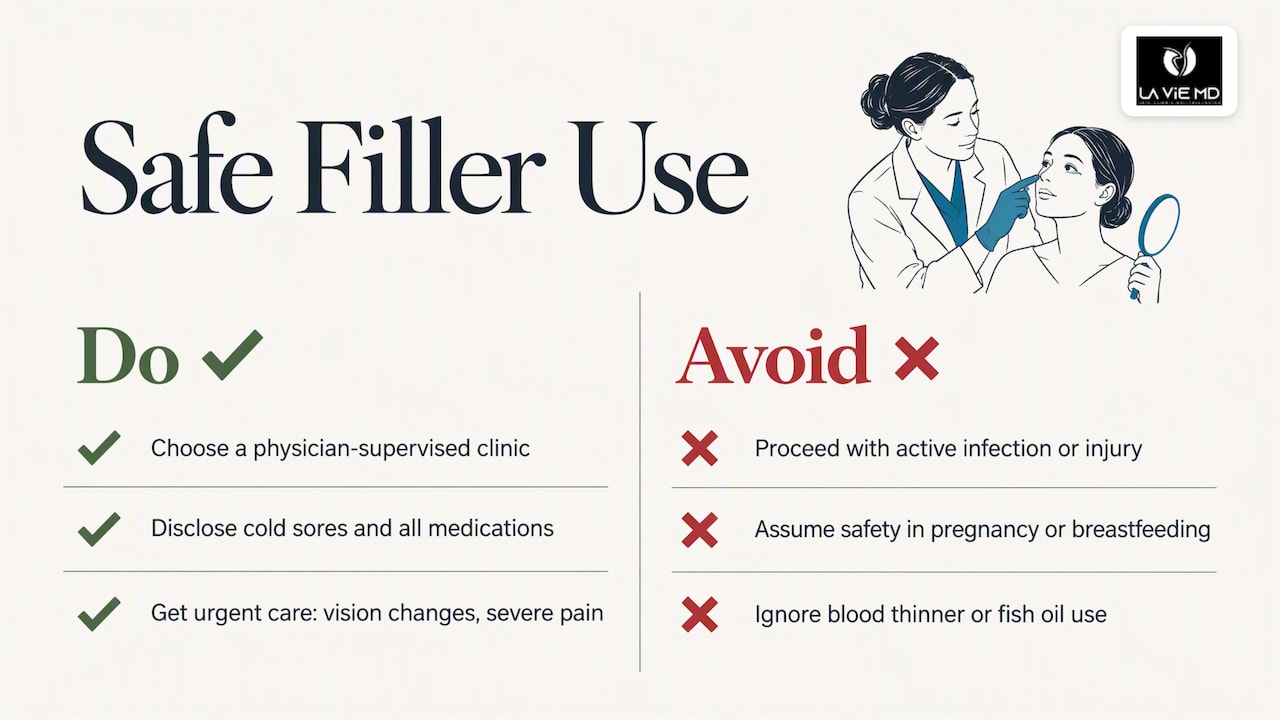
Rare but serious complications. FDA safety materials describe injection site reactions as well as rare but serious problems, including blindness, stroke and skin necrosis from inadvertent injection into a blood vessel. The same document states that there is no known safe and reliable treatment for blindness caused by this, so the clinical focus is on preventing accidental vessel penetration. That is why you want an injector who knows the vascular anatomy and a clinic that works under physician supervision. The review also stresses that the infraorbital area requires understanding of vascular and lymphatic anatomy and the facial fat compartments. Seek urgent care right away if you notice vision changes, severe pain or skin that turns white or dusky after an injection.
When to wait. FDA labeling for a dermal filler says use should be deferred when an active inflammatory process, infection or skin injury is present, and that safety during pregnancy or breastfeeding has not been established. The same labeling notes that a history of herpetic eruption may be associated with reactivation, and that caution applies to people taking anticoagulants because of bruising or bleeding. Tell your provider about any history of cold sores and every medication and supplement you take, including blood thinners and fish oil.
Lumps and movement. Filler that shifts or looks puffy is usually a placement or product issue. Our guide to filler migration and how to prevent it covers what to expect and how we reduce the risk.
What does it cost?
The American Society of Plastic Surgeons reports a 2023 average surgeon or physician fee of $715 for hyaluronic acid fillers. That is a national average for the fee itself, and it does not include other costs. Your actual cost depends on how much product your anatomy needs, whether the cheeks are treated too, and your location. We do not publish a flat price for under-eye filler, because the amount is decided at the consultation. We will give you a clear quote for your plan before you commit to anything.
Is there a permanent fix?
Filler is not permanent. HA gradually breaks down, which is part of why it is considered adjustable, and many people keep their result by returning for touch-ups. Surgical options such as fat transfer are described in the literature as longer-lasting approaches, but they involve a surgeon, anesthesia and a recovery period, and they are not reversible in the same way. For many people the practical choice is between a maintained, adjustable result and a more committed procedure. Our view is that most people with mild to moderate hollows are well served starting with HA, because it lets you see how your face looks with restored volume before deciding on anything more.
What you can do at home
Topical products and habits will not refill a depression, but they support the skin around it. Daily sunscreen protects thin under-eye skin from further damage. A color-correcting concealer can offset a bluish tint. Good sleep and managing allergies may reduce fluid puffiness, which often exaggerates the look of a hollow. Medical-grade skincare, chosen for your skin type, can improve texture over time. These steps pair well with in-office treatment, and they help you keep results looking fresh.
Perspective
Under-eye hollows are one of the most misunderstood concerns we see. Patients come in asking for “something for dark circles” and leave with a plan that is actually about cheek support, skin quality or both. We think that is the point of having a physician involved.
Our approach is built around individualized care under the supervision of a board-certified physician. We do not start with a product. We start with your anatomy, the way shadows fall on your face and what you want to look like on a normal Tuesday, not just in a filtered photo.
For most mild to moderate hollows, we believe a carefully placed, soft HA filler is the best place to start. It is immediate, it is adjustable and it lets us build slowly. When skin quality is part of the issue, we can combine it with advanced skin treatments, so the whole area looks rested rather than just filled.
Subtle is the goal. If friends say you look well rested and cannot say why, we did our job.
Dr N
Treatment at LA ViE MD
Our board-certified physician, Dr. Neetu Nebhwani, leads every treatment plan at LA ViE MD, with custom plans built around each patient’s skin concerns and goals. We see patients from Danville, Livermore, Dublin and Los Gatos. If you are considering treatment for hollows, start with a consultation on our injectables page, or read about our dermal fillers in Danville.

Bring photos of how your eyes looked a few years ago if you have them. They help us see what volume has changed and what you are hoping to restore. You can book a consultation through our site to start.
How to prepare and what to expect afterward
A few practical steps make the experience smoother:
- Before. Tell your provider about medications and supplements. Avoid planning treatment right before a major event, so any bruising has time to clear.
- Day of. Come with clean skin, and bring your questions.
- After. Follow your aftercare instructions, keep your head slightly elevated the first night if advised, and avoid pressing on the area.
- Follow-up. A check-in after the initial swelling settles lets us judge the real result and decide whether a small adjustment is worthwhile.
Because HA can be dissolved with hyaluronidase, a result that is not what you hoped for does not have to be a permanent one. Still, the best way to avoid needing that is careful planning up front.
How to choose a provider
Questions worth asking any clinic:
- Who will be doing the injection, and what is their training in facial anatomy?
- Is a physician supervising, and available if there is a complication?
- Do you have hyaluronidase on hand?
- Will you assess my cheeks as well as the under-eye area?
- What will you do if I am not a good candidate for filler?
A clinic that answers the last question openly is one you can trust with the first.
FAQ
How long do under eye filler results last?
In a 2021 randomized study, HA correction of infraorbital hollowing lasted through one year. Your result can differ based on product choice, the amount placed and how your body processes the filler. Many patients schedule maintenance visits to keep the effect consistent.
Does under eye filler hurt?
Most people describe pressure and mild stinging rather than sharp pain. We can use numbing and gentle technique to keep you comfortable. Tenderness, bruising and swelling afterward typically settle within one to two weeks.
Can filler be removed if I do not like it?
Yes, HA fillers can be dissolved with an enzyme called hyaluronidase. This is one reason HA is the standard choice for this delicate area. Dissolving is done by a trained provider and should not be attempted at home.
Will filler fix puffy bags under my eyes?
Not usually. Fat bags and loose skin are different from hollows, and the research notes that severe laxity or fat prolapse may be better treated surgically. A consultation will tell you whether your concern is a hollow, a bag or a mix of both.
Is under eye filler safe?
In trained hands it is a widely performed treatment, but it carries risks, including rare serious vascular complications described by the FDA. Choose a physician-supervised clinic, share your medical history and medications, and follow aftercare instructions.
Sources
- Infraorbital Hollow Rejuvenation: Considerations (PMC, 2023)
- Hills and Valleys: Understanding the Under-Eye (PMC)
- Prospective, multicenter, randomized study of VYC-15L for infraorbital hollowing (PubMed, 2021)
- Multicenter, randomized, evaluator-blinded study of needle and cannula administration (PubMed, 2024)
- FDA Executive Summary, General Issues Panel Meeting on dermal fillers
- FDA dermal filler labeling documentation (P170002S050D)
- Taking the mystery out of Botox and dermal fillers (ASPS)