
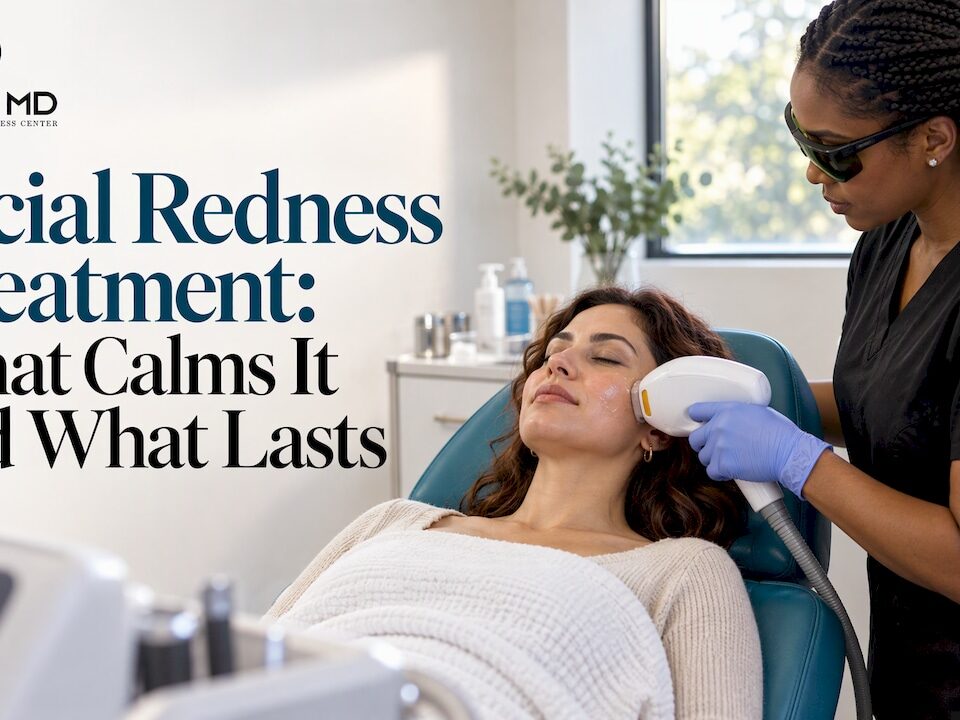
Facial Redness Treatment: What Calms It and What Lasts
The right facial redness treatment depends on one question: why is your face red? Flushing from heat or stress fades in hours. Redness that lingers can come from rosacea, dermatitis, sun damage or visible vessels, and each one is treated differently. The surest route is a physician who looks at your skin and builds a plan around the cause. At LA ViE MD, Dr. Neetu Nebhwani, a board-certified Internal Medicine physician, creates custom treatment plans based on each client’s skin concerns and goals, so you are not guessing with products.
TL;DR
- Redness that comes and goes within a few hours is usually normal flushing. Redness that lasts, or keeps returning, deserves a closer look.
- Gentle cleansing, fragrance-free moisturizer and mineral SPF 30+ are the foundation of every plan.
- Prescription creams can fade persistent rosacea redness for hours, and laser or light treatments can target visible vessels.
- If redness lasts more than 2 weeks, have it evaluated, because several conditions look alike.
- A custom plan under physician supervision beats trial and error with products.
Table of Contents
- First, work out what kind of redness you have
- What calms redness without making it worse
- When redness needs a physician
- Treatment options for persistent redness
- Why a physician-led plan beats trial and error
- Perspective
- Start with a consultation
- FAQ
- Sources
First, work out what kind of redness you have
Facial redness is a blood-flow signal. According to UpToDate’s clinical review, redness comes from dilated blood vessels in the skin and increased flow. A brief response to strong emotion, exercise or heat is normal. Longer-lasting redness points to inflammation, an external irritant or an underlying skin condition.
The American Academy of Dermatology (AAD) explains the practical difference: normal flushing from embarrassment, heat, alcohol or wind comes and goes within a few hours or less. Rosacea redness lasts longer and becomes more noticeable around triggers. It often starts as a tendency to flush, and flushes that grow more frequent or last longer can be an early sign.
Common causes
The AAD lists ten reasons a face turns red. The ones readers meet most often:
- Rosacea. A chronic condition that begins with easy flushing, then redness that lasts or never fades. It cannot be cured, but treatment can lessen it.
- Contact dermatitis. An irritant or allergic reaction to things like soap, fragrance, hair dye or latex. It clears once the trigger is gone.
- Seborrheic dermatitis. A red rash that can be oily or scaly and usually needs treatment to clear.
- Eczema and psoriasis. Inflammatory skin conditions that can show up on the face.
- Medication reactions. Including sun sensitivity, or irritation from using hydrocortisone cream longer than directed.
- Sun-damaged spider veins. Small visible vessels that stay red.
Rosacea is not rare. American Family Physician (2024) describes it as a chronic inflammatory disease of the central face affecting about 5% of the population. It also notes that in skin of color, redness and visible vessels are harder to see, so diagnosis can be delayed.
Clues it may be rosacea
The AAD notes rosacea is often mistaken for acne, sunburn or a skin reaction. Clues include acne-like breakouts that nothing clears, frequent facial sunburns, a face that often feels warm, and skin that stings or burns when you apply certain products. If that sounds familiar, a physician visit will save you months of experimenting.
What calms redness without making it worse
Whatever the cause, the first move is to stop irritating the skin. Mayo Clinic advises identifying and avoiding your personal triggers, cleansing gently with a nonsoap cleanser, moisturizing with fragrance-free products and wearing broad-spectrum SPF 30 or higher, reapplied every two hours (more often when swimming or sweating).
A simple daily routine
- Cleanse once or twice a day with a gentle, nonsoap cleanser and your hands only. Skip washcloths and scrubs.
- Moisturize daily with a fragrance-free product. The AAD points to a small study in which adding a gentle moisturizer to a rosacea gel reduced dryness and peeling on the moisturized side of the face.
- Wear mineral sunscreen. Zinc oxide or titanium dioxide gives physical protection and, per the 2020 National Rosacea Society guideline update, does not generate heat as a byproduct. Apply products only once your face is completely dry, since stinging is more likely on wet skin.
- Camouflage if you want to. Green-tinted concealer neutralizes red tones, and water-based or powder makeup tends to be gentler.
Ingredients to avoid when skin is reactive
The AAD’s rosacea skin care tips recommend avoiding products with alcohol, camphor, fragrance, glycolic acid, lactic acid, menthol, sodium lauryl sulfate or urea. Choose noncomedogenic products made for sensitive skin. Test a new product on a quarter-sized patch of inner arm for 7 to 10 days before it goes on your face.
That list matters if you are tempted by a strong exfoliating serum or peel. Active, exfoliating routines can inflame skin that is already red, so ask a physician before adding anything new.
What about cold compresses and home remedies?
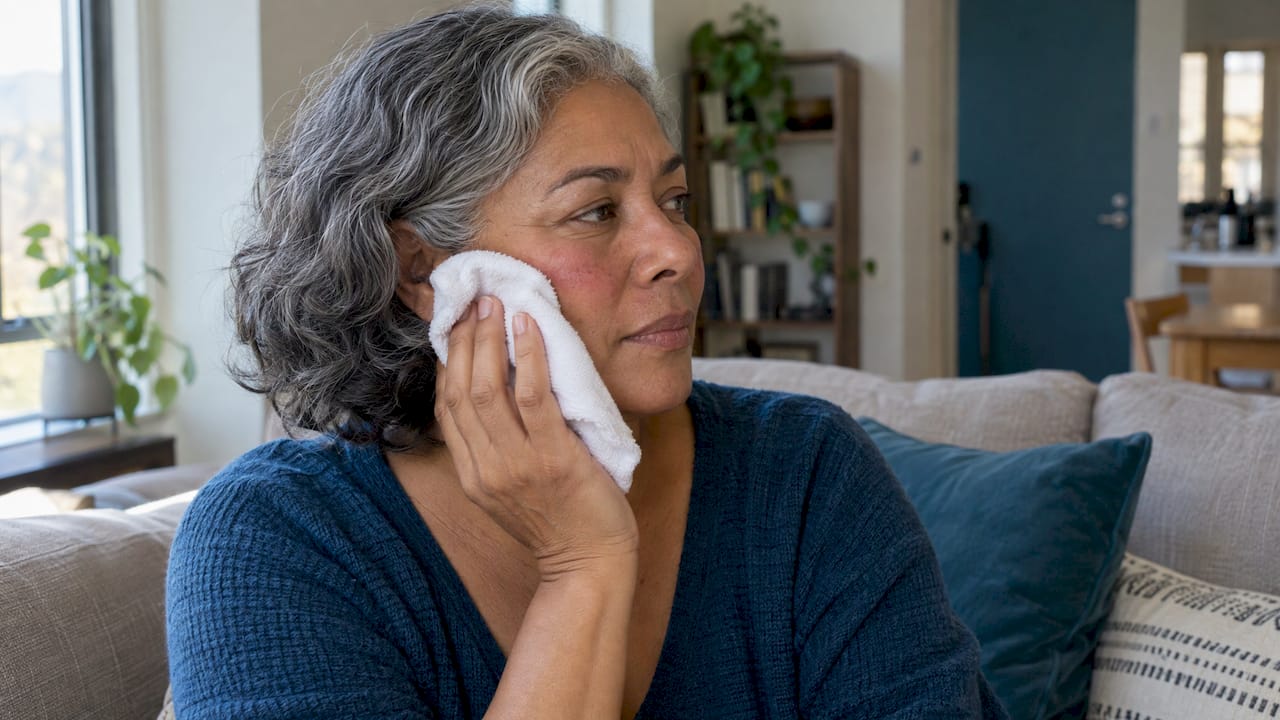
A cool, clean compress can feel soothing after a flush. But the quick fixes that rank on Google are mostly about comfort, not cause. If redness keeps coming back, soothing it each time does not tell you what is driving it.
When redness needs a physician
The AAD says that if facial redness lasts more than 2 weeks, you should be seen, because many conditions cause a red face and the right diagnosis is essential. Get evaluated sooner if you have a butterfly-shaped rash across the cheeks, a rash with pain or blistering, or eye irritation along with the redness. These can point to conditions such as lupus or shingles, and the AAD lists both among causes.
American Family Physician also recommends referral for thickened skin changes and for ocular rosacea, which affects the eyes. Rosacea can also affect confidence and quality of life, so wanting it treated is reasonable, not vain.
As for vitamin deficiencies, the sources reviewed here do not identify one as a typical cause of a red face. Skin conditions, triggers and blood-vessel behavior are far more common explanations.
Treatment options for persistent redness
Once the cause is clear, treatment can go well beyond skincare. Which option fits depends on whether you have diffuse redness, visible vessels, bumps or a mix.
Prescription topicals
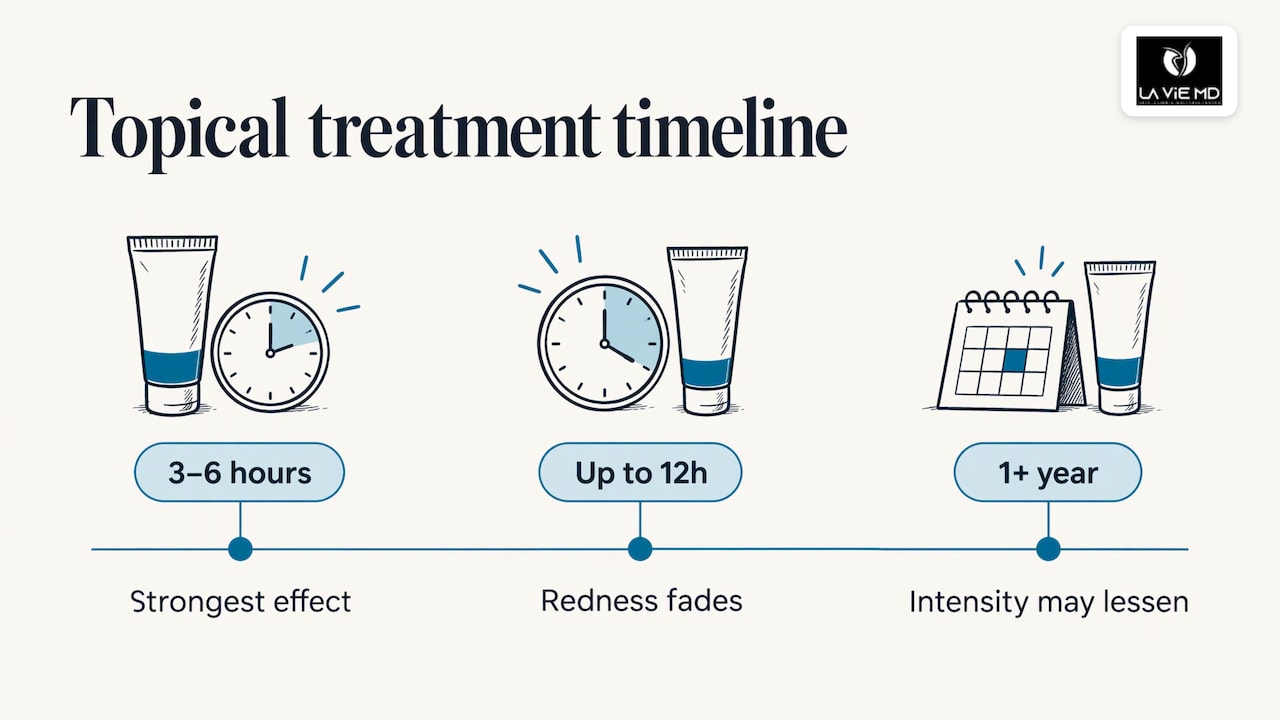
Two creams target persistent redness itself. The AAD says brimonidine gel and oxymetazoline cream temporarily fade persistent rosacea color by narrowing blood vessels, for up to 12 hours, with best results 3 to 6 hours after application. Both are FDA approved for adults 18 and older. Color gradually returns, and daily use for a year or longer may reduce overall intensity.
For the bumps and pimples of rosacea, other prescription options exist. American Family Physician rates ivermectin 1% cream, metronidazole 0.75% gel and azelaic acid 15% gel as first-line topicals, and low-dose doxycycline 40 mg as first-line oral therapy for moderate to severe cases. These are prescribed after a diagnosis, which is why the first visit matters.
Laser and light treatments
For redness that stays, device-based treatment is often the next step. The AAD says laser therapy can reduce persistent color, laser or light treatments can treat visible vessels, and intense pulsed light (IPL) can reduce flushing and improve skin texture. A review from UC San Diego and the American Acne & Rosacea Society reports that pulsed-dye, IPL and 532-nm lasers work better on visible telangiectasias (tiny surface vessels) than on diffuse redness, though both respond.
The AAD also cautions that in inexperienced hands these devices can cause burns, permanent color changes or scars. Practitioner training and medical supervision are the safety factors that matter most. The same review warns that using a topical redness cream right after a device that disrupts the skin barrier can raise absorption and the risk of low blood pressure, so the timing of your treatments should be planned by one clinician who knows the whole picture.
If light-based treatment interests you, our pages on IPL treatment in the Bay Area and IPL versus laser for sun damage explain how these technologies differ. Local readers can see the IPL page for Dublin or the IPL page for Los Gatos.
Redness that is really pigment
Sometimes what looks like redness is brown or pink discoloration left by sun or past breakouts. That calls for a different approach, and our guide to dark spots on the face shows how types differ. Our PicoWay laser page covers pigmentation and scar reduction.
A quick comparison
| Approach | Best for | Typical timing of effect |
|---|---|---|
| Gentle routine plus mineral SPF | Every type of redness, prevention | Gradual, with consistency |
| Prescription redness creams | Persistent diffuse rosacea redness | Hours per application, per the AAD |
| Prescription topicals or oral therapy | Rosacea bumps and pimples | Weeks, per the prescriber |
| Laser or IPL | Visible vessels, persistent color, flushing | Over a series of visits, per your clinician |
Why a physician-led plan beats trial and error
Redness has overlapping causes. Rosacea, seborrheic dermatitis and a contact reaction can all look like “just red skin,” and what soothes one can aggravate another. Layering a peel, a retinol and a laser onto an undiagnosed condition is how people end up redder than when they started.
Several things work in your favor with a physician-led plan:
- One person owns the sequence. Skincare, in-office treatments and any prescription are timed together, which matters given the barrier and absorption warning above.
- The plan fits your skin. Our approach is custom treatment plans based on each client’s specific skin concerns and goals, not a menu of packages.
- Technology is supervised. All procedures at LA ViE MD run under the direct supervision of a board-certified physician, which is the safeguard the AAD’s warning about inexperienced operators points to.
We also see readers weigh redness treatment against other goals such as texture or tone. Our comparison of chemical peel or laser for resurfacing helps you think through those trade-offs, with the reminder that reactive, red skin often needs a gentler sequence first.
Perspective
When someone tells me they have “sensitive skin,” my first question is what the redness actually does: when it appears, how long it stays, and what makes it worse. The answer tells us whether we are dealing with flushing, rosacea, a reaction to a product or visible vessels.
I would rather spend the first visit understanding your skin than sell you a treatment. A good plan starts calm: a gentle routine, mineral sun protection and no unnecessary actives. Then, if redness persists, we can discuss light-based or laser options, planned around your skin and your goals.
That is what physician supervision means to us. Advanced technology is valuable when someone qualified decides if, when and how it is used. Our goal is natural-looking, healthier skin, with a plan you understand.
Dr N
Start with a consultation
If your redness has outlasted two weeks or keeps returning, a consultation is the practical next step. At LA ViE MD, you will meet a physician who builds a custom plan for your skin. We serve clients in Danville, Livermore, Dublin and Los Gatos. You can explore our laser procedures and skin rejuvenation treatments, or start at laviemd.us to book.
Bring a list of your current products, any medications and what seems to trigger your flushing. It helps the conversation go faster.
FAQ
What gets rid of redness on the face quickly?
Cool, gentle care helps in the short term, and green-tinted concealer can cover redness right away, as Mayo Clinic notes. For persistent rosacea redness, prescription brimonidine or oxymetazoline can fade color for hours, per the AAD. Lasting improvement comes from treating the cause.
Can I reduce facial redness with skincare alone?
It can help a great deal when irritation drives the redness. Use a gentle cleanser, fragrance-free moisturizer and mineral SPF 30+, and avoid the irritating ingredients listed above. If redness is from rosacea or visible vessels, skincare supports treatment but usually does not replace it.
What should I avoid putting on red or rosacea-prone skin?
The AAD advises avoiding alcohol, camphor, fragrance, glycolic acid, lactic acid, menthol, sodium lauryl sulfate and urea. Also skip scrubs, washcloths and exfoliators. Test any new product on your inner arm for 7 to 10 days first.
Do lasers work for facial redness?
The AAD says laser therapy can reduce persistent color, and laser or light treatments can treat visible vessels. Results depend on the cause and on the practitioner, since the same devices can cause burns or scarring in inexperienced hands. A physician-supervised plan is the safest way to use them.
When should I get my red face checked?
If redness lasts more than 2 weeks, the AAD recommends being seen. Go sooner for a butterfly-shaped facial rash, painful or blistering rash, or eye symptoms.
Sources
- 10 reasons your face is red (AAD)
- Rosacea: Overview (AAD)
- Rosacea: Diagnosis and treatment (AAD)
- 7 rosacea skin care tips (AAD)
- Rosacea skin care tips dermatologists recommend (AAD)
- Rosacea: Common Questions and Answers (American Family Physician, 2024)
- Approach to the patient with facial erythema (UpToDate)
- Rosacea diagnosis and treatment (Mayo Clinic)
- National Rosacea Society guideline update, 2020 (J Am Acad Dermatol)
- Rosacea topical therapy review (UC San Diego, 2020)


