Lip Lines Treatment: What Works and How to Choose
The most effective lip lines treatment is usually a combination, matched to the kind of line you have. Neuromodulator injections such as Botox or Dysport relax the muscle that creases the skin, dermal fillers restore lost support, and resurfacing treatments such as lasers, peels and radiofrequency microneedling improve skin texture. Daily sun protection and good skincare keep the lines from deepening. Which mix is right depends on whether your lines are fine and only show when you purse your lips, or etched in at rest.
TL;DR
- Lip lines form from repeated muscle movement, collagen loss, sun exposure and smoking, so treatment works best when it addresses both the muscle and the skin.
- Fine lines usually respond to small-dose neuromodulators and skin resurfacing. Deeper lines often need filler, sometimes with those other treatments.
- Neuromodulator results may last up to about six months, and lip fillers up to about 12 months, depending on the product and the person.
- Daily SPF 30, a lip balm, a topical antioxidant and not smoking all help, but they work best alongside in-office treatment.
- The lip area is delicate, so a physician-supervised plan and a consultation matter more here than almost anywhere else on the face.
Table of Contents
- What causes lines around the mouth
- Fine lines vs. deep lines: how treatment differs
- Neuromodulators: Botox, Dysport and Daxxify
- Dermal fillers for deeper lines
- Skin resurfacing and collagen-stimulating options
- Combining treatments for lasting smoothness
- What you can do at home
- Safety, side effects and downtime
- Our perspective
- Treat lip lines with a physician-led plan
- FAQ
- Sources
What causes lines around the mouth
Lip lines are the vertical wrinkles that run along and above the upper lip. Cleveland Clinic explains that the muscle around the mouth becomes more active over time, and that this activity is the underlying cause. Every time you speak, sip, smile or purse your lips, that muscle folds the skin in the same place.
Several other factors add to it, according to the same source: loss of collagen and elastin with age, smoking, sun damage, heavy alcohol use, genetics, too little sleep and repetitive movements. Smoking and sun exposure in particular can create deeper lip wrinkles.
The skin there is also thin. Healthline reports that skin makes an estimated 1 percent less collagen every year after age 20 and that the mouth area is one of the first places on the face to wrinkle. That is why many women notice the first faint lines in their 30s, sometimes earlier.
Knowing the cause matters because it tells you what to treat. A line that comes from muscle movement calls for a different tool than one caused by volume loss or sun-damaged skin. Most people have a mix of all three.
Fine lines vs. deep lines: how treatment differs
The first thing a physician looks at is whether the line is dynamic or static.
- Dynamic lines appear only when the muscle moves, such as when you pucker or use a straw. They are the early stage.
- Static lines remain when your face is relaxed. They are creases that have settled into the skin, often with some loss of lip border definition or fullness.
Here is how the main approaches map onto those stages.
| Concern | Typical approach | What it does |
|---|---|---|
| Early, dynamic lines | Small-dose neuromodulator (Botox, Dysport, Daxxify) | Relaxes the muscle that creases the skin |
| Fine static lines, rough or sun-damaged texture | Chemical peel, laser resurfacing, microneedling, radiofrequency microneedling | Stimulates renewal and smooths the surface |
| Deeper static lines, lost support | Hyaluronic acid filler | Restores volume under the crease |
| Established lines with several contributors | Combination plan | Treats muscle, volume and skin together |
This is a general framework, not a prescription. The right plan comes from an in-person exam, because lip anatomy, skin thickness and goals differ from person to person.
Neuromodulators: Botox, Dysport and Daxxify
Neuromodulators temporarily relax the muscle that wrinkles the upper lip. A chapter in a Wiley reference text reviewed the FDA-approved toxins used around the mouth, including Dysport, Botox and Xeomin, with a focus on hyperdynamic vertical lip lines. The dose here is small. The goal is to soften the pucker, not to stop you from speaking, drinking or smiling naturally.
Cleveland Clinic notes that Botox may last up to six months in this area. Individual timing varies with dose, metabolism and how active the muscle is.
At LA ViE MD we offer Botox, Dysport and Daxxify, and you can see how they differ in our guide to Botox, Dysport, Xeomin and Daxxify. If you want the details on one product, our page on Dysport for wrinkles explains what it treats and what to expect. Treating early lines before they set can also slow their progress, which we cover in preventative Botox.
Dermal fillers for deeper lines
When a line stays visible at rest, a hyaluronic acid filler can lift the skin from underneath so the crease looks shallower. Some products are specifically cleared for this area. The FDA approval document for Restylane Kysse states it is indicated for the lips and for correcting upper perioral rhytids in patients over 21, meaning the wrinkles above the upper lip.
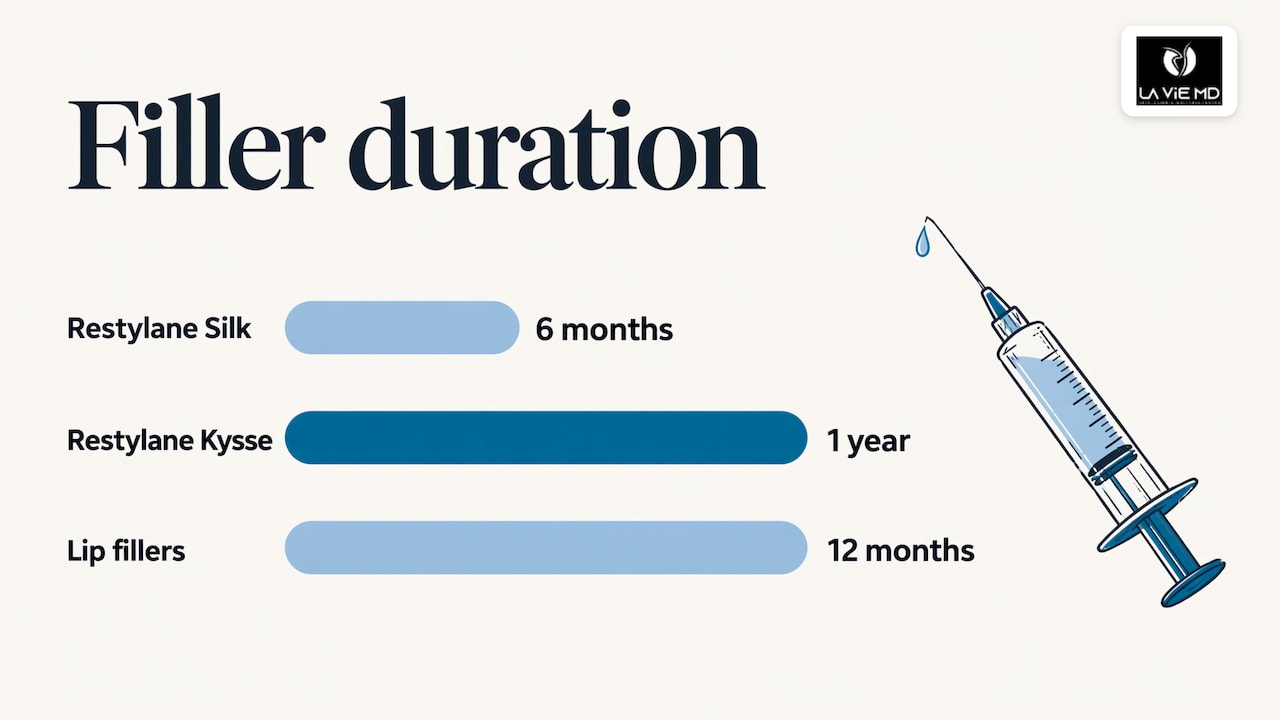
Duration depends on the product. Restylane USA reports that Restylane Silk has been shown to last up to 6 months, and Restylane Kysse up to 1 year in the lips. Cleveland Clinic says lip fillers can last up to 12 months in general.
A good filler plan for lip lines is conservative. The aim is to soften the crease and support the lip border, not to make the lips look larger unless that is also your goal. If you are choosing between muscle-relaxing injections and filler, our comparison of Botox vs. fillers walks through the decision. For the filler side in detail, see dermal fillers for skin rejuvenation. If you are also weighing a lip flip, read lip flip vs. filler.
Skin resurfacing and collagen-stimulating options
Sometimes the issue is the skin itself: crepey, rough or sun-damaged. Cleveland Clinic lists chemical peels, dermabrasion, laser skin resurfacing and microneedling with or without radiofrequency among the non-surgical options for reducing lip lines.
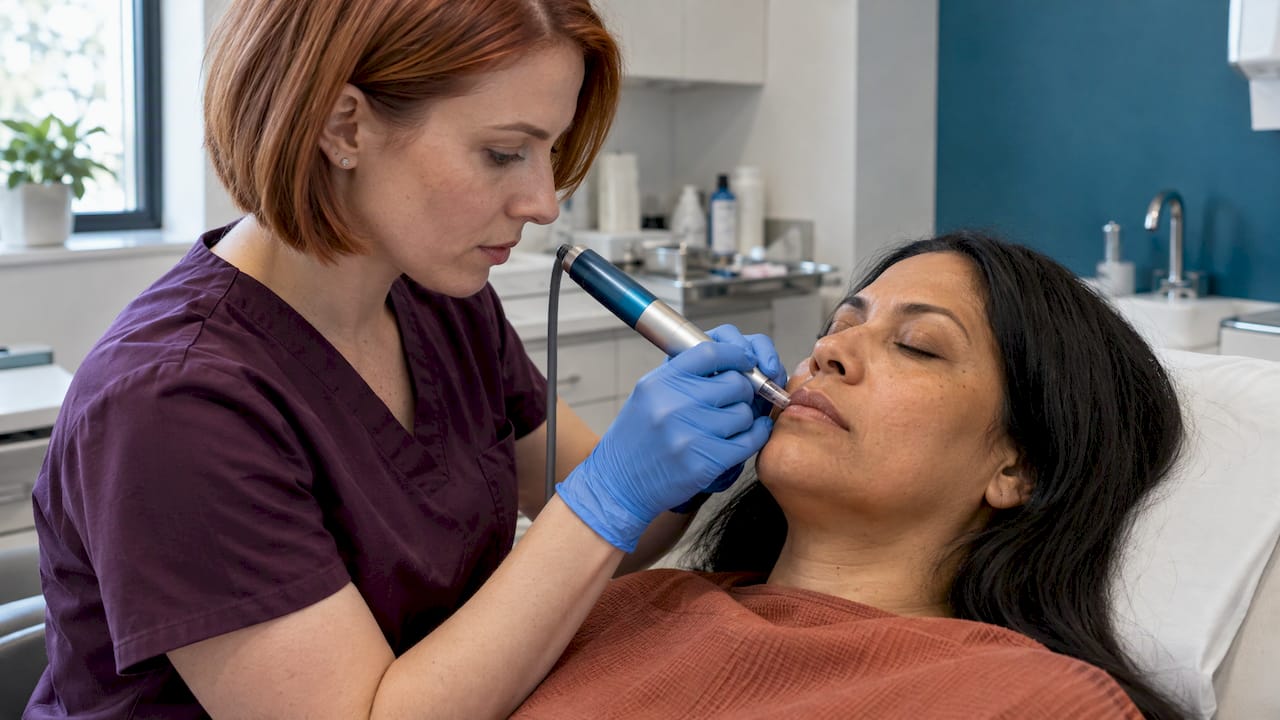
Recovery scales with depth. Mayo Clinic’s news network notes that ablative laser resurfacing can require one to two weeks of recovery at home, and deeper chemical peels a week or two. The same article says results from ablative laser can be dramatic and last for many years. Lighter treatments mean less downtime and more gradual change.
At our practice, the relevant tools include:
- Morpheus8, a radiofrequency microneedling treatment, for skin tightening and texture.
- Microneedling, to stimulate collagen.
- Tetra coolpeel CO2 laser, for resurfacing.
- Medical-grade chemical peels and HydraFacial, for gentler texture and glow.
You can browse these on our skin rejuvenation page and laser procedures page. Our guide to lip resurfacing explains how the approach works around the mouth, and our wrinkle treatment overview shows how the options fit together.
Combining treatments for lasting smoothness
Because lip lines come from muscle, volume and skin, one treatment rarely does everything. A typical sequence might look like this:
- A small amount of neuromodulator to quiet the pucker.
- Filler placed conservatively along the deeper creases or lip border, if needed.
- A resurfacing or collagen-stimulating series to refine skin quality.
- A medical-grade skincare routine at home to protect the result.
The order and timing are decided at your consultation. Some people start with just one step and add others as they see how their skin responds.
What you can do at home
Home care will not erase established lines, but it supports everything done in the office. Cleveland Clinic recommends daily SPF 30 sunscreen and lip balm, a daily antioxidant such as topical vitamin C, quitting smoking and managing stress to help lessen lip line severity.
In practice:
- Apply sunscreen to the upper lip area, which people often skip.
- Use a lip balm with SPF during the day.
- Avoid using a straw constantly if you notice the pucker lines deepening.
- Sleep on your back when you can, so you are not creasing the skin against a pillow.
- Ask about medical-grade skincare suited to thin perioral skin, since lip-area skin can be sensitive to strong actives.
Safety, side effects and downtime
The lip area is vascular and delicate, which is why who treats you matters. The patient information for Restylane Silk lists swelling, tenderness, redness, bruising, itching and pain as common side effects, and says most were tolerable and resolved within two weeks. The same document explains that accidental injection into a blood vessel can cause serious complications, including vision problems, stroke, scabbing or scarring. Rare as that is, it is the reason to choose a practice where a physician with deep knowledge of facial anatomy oversees the treatment, and to tell your provider about any history of blood thinners, cold sores or prior filler reactions before you book. Seek urgent medical care if you notice vision changes, severe pain or skin that turns white or dusky after an injection.
Before a visit, tell your provider if you are pregnant or breastfeeding, take blood thinners, or have a history of cold sores around the mouth, since those affect which treatments are suitable and how to prepare.
Our perspective
Lip lines are one of the most common concerns we hear, and one of the most personal. Two people can have the same visible lines for completely different reasons: one from years of muscle activity, another from sun, another from volume loss.
That is why we do not start with a product. We start with an exam, and we build a plan around your face, your goals and how natural you want the result to look. As a board-certified physician, I want you to understand what each step is doing and why it is in the plan.
Our approach combines careful injectables, skin-resurfacing technology and medical-grade skincare, so the muscle, the volume and the skin quality are all addressed. Subtle is the goal: you should look like yourself, rested and smooth, not treated.
Dr N
Treat lip lines with a physician-led plan
At LA ViE MD, Dr. Neetu Nebhwani, a board-certified internal medicine physician, supervises custom treatment plans for the lines around your mouth. We offer neuromodulators, dermal fillers and skin-resurfacing treatments at our Bay Area locations, serving Danville, Livermore, Dublin and Los Gatos.

Explore our injectables or visit LA ViE MD to book a consultation and get a plan matched to your skin. Local patients can also look at our Botox in Livermore and dermal fillers in Dublin pages.
FAQ
What is the best treatment for lip lines?
There is no single best option, because it depends on the type of line. Small-dose neuromodulators suit dynamic lines, filler suits deeper static creases, and resurfacing improves skin texture. Many people get the best result from a combination, planned at a consultation.
How long do lip line treatments last?
Cleveland Clinic says Botox may last up to six months and lip fillers up to 12 months. Product matters: Restylane reports up to 6 months for Silk and up to 1 year for Kysse in the lips. Your own results will vary with the product, dose and your metabolism.
Can I get rid of lip lines naturally?
You can limit how fast they deepen with daily SPF 30, lip balm, a topical antioxidant such as vitamin C, not smoking and managing stress. Those habits help prevent worsening and support your treatment results. Established lines usually need in-office treatment to soften noticeably.
Is there downtime after treatment?
Injectables generally mean mild swelling, redness or bruising that often settles within about two weeks. Deeper laser resurfacing or peels can need one to two weeks at home, according to Mayo Clinic. Your provider will tell you what to expect for your specific plan.
Are lip line treatments safe?
When performed by a trained, physician-supervised provider, they are widely used, but every injection carries risks, including rare vascular complications. Choose a practice with strong knowledge of facial anatomy and share your full medical history before treatment.
Sources
- Cleveland Clinic: Lip Lines
- Healthline: Wrinkles Around the Mouth
- Wiley: Treatment of the Perioral Area, Botulinum Toxins
- FDA: Restylane Kysse approval document
- Restylane USA: Frequently Asked Questions
- Restylane Silk patient information
- Mayo Clinic News Network: Skin Resurfacing Options