Uneven Skin Texture: Causes and What Actually Smooths It
Uneven skin texture usually comes from a few fixable things: dead cells that build up, dehydration, sun damage, acne scarring, and a skin barrier that has been irritated by too much scrubbing. The right fix depends on which one you have. Rough, flaky skin responds to a different plan than pitted acne scars or enlarged pores. Below, we explain how to tell them apart, what you can do at home, and when a physician-supervised treatment makes sense.
TL;DR
- Texture problems come from different causes (buildup, dryness, scarring, collagen loss), and each needs a different approach.
- At home, the basics are daily moisturizer, daily broad-spectrum SPF 30 or higher, gentle exfoliation once or twice a week, and a retinoid or AHA if your skin tolerates it.
- Over-exfoliating is one of the most common ways people make texture worse.
- For scars, deeper roughness or collagen loss, in-office options such as microneedling, radiofrequency microneedling and peels work on layers a cream cannot reach.
- A spot that changes, bleeds, itches or does not go away is not a texture issue. Have a dermatologist look at it.
Table of Contents
- What uneven skin texture actually is
- What causes uneven skin texture
- An at-home routine that actually helps
- When a texture change needs a medical look
- Professional treatments for uneven skin texture
- Risks, downtime and realistic expectations
- How to choose where to start
- Our perspective
- Treatments for uneven skin texture at LA ViE MD
- FAQ
- Sources
What uneven skin texture actually is
Texture is how your skin feels and reflects light: bumps, roughness, dry patches, visible pores, shallow scars, fine crepey lines. It is different from uneven skin tone, which is about color (dark spots, redness). The two often show up together, because sun damage and acne tend to cause both, but they are treated with different tools.
A useful way to sort it:
- Surface roughness: flaky, dull or sandpaper-like skin. Usually buildup or dryness.
- Small bumps: clogged pores, keratosis pilaris on arms and thighs, or breakouts.
- Indentations: acne scars or other scarring, which sit below the surface.
- Enlarged pores and crepey skin: tied to oil, genetics, and loss of support with age.
The first group is mostly a skincare problem. The last two usually need more than skincare.
What causes uneven skin texture
Dermatologists quoted by Women’s Health describe buildup of dry, dead skin cells and disrupted cell turnover as a common driver. Turnover can slow down because of aging, dryness, sun exposure, pollutants or smoking. The same article notes that eczema, keratosis pilaris, acne scars and enlarged pores can add to it.
Verywell Health’s dermatologist-reviewed guide lists a wider set of contributors: UV damage, eczema or psoriasis, genetics, dehydration, smoking, alcohol, pollution and aging. Most people have two or three of these at once.
Your skincare routine can be the cause
This surprises many patients. The Women’s Health dermatologists warn that over-cleansing, over-exfoliating or layering too many active products can strip natural oils and cause irritation, redness, enlarged-looking pores, breakouts and rough patches. The American Academy of Dermatology likewise says that over-exfoliation can damage the skin barrier, leading to irritation, redness or more breakouts.
If your skin feels tight, stings when you apply products, or looks worse since you added a scrub, pull back before you add anything new.
Sun is the quiet long-term factor
Bay Area sun is easy to underestimate on cool, foggy days. UV exposure accumulates, and it shows up years later as roughness, uneven pigment and loss of firmness. That is why daily sunscreen sits at the top of every dermatologist’s list, including for texture.
An at-home routine that actually helps
You do not need a ten-step routine. Verywell Health’s dermatologist tips come down to moisturizing once or twice daily, wearing broad-spectrum SPF 30 or higher every day, and exfoliating about once or twice a week.
A simple structure:
- Morning: gentle cleanser, moisturizer, broad-spectrum SPF 30 or higher.
- Evening: gentle cleanser, then your active (see below), then moisturizer.
- Once or twice a week: a mild exfoliant, on a night you are not using another strong active.
Which ingredients earn their place
The same guide points to retinol or retinoids and alpha hydroxy acids such as glycolic or lactic acid as ingredients that can improve texture. A few practical notes from our side:
- Start a retinoid two or three nights a week and build up. Redness and peeling in the first weeks are common and usually settle, but they are your cue not to add an acid the same night.
- Use an AHA or a retinoid on a given night, not both, until your skin has shown you what it tolerates.
- Retinoids make you more sun-sensitive, so the sunscreen is not optional.
Chemical or physical exfoliation?
For dry, sensitive or acne-prone skin, the AAD notes that a mild chemical exfoliator may be preferable to mechanical exfoliation, which can be too irritating. Gritty scrubs and cleansing brushes are the usual culprits. The AAD also advises caution with aggressive exfoliation if you have a deeper skin tone, because it can increase pigmentation.
What about drinking more water?
It is the most common question, and the honest answer is: probably a small effect at best. A 2018 systematic review found weak evidence that extra water may slightly increase skin hydration, mostly in people who were drinking little to begin with. A 2024 study of 43 healthy women found moisturizer gave better hydration results than extra water, though the authors noted the small groups and one-month length limited the conclusions. An older review found no scientific proof that eight glasses a day keeps skin hydrated.
Stay hydrated for your health. For your skin, put the moisturizer first.
When a texture change needs a medical look
Most texture issues are cosmetic. A few things are not. MD Anderson advises seeing a dermatologist for a spot that follows the ABCDE warning signs, hurts, bleeds, itches, is not going away, or looks unlike your other spots. Nebraska Medicine adds that a mole that grows or changes, and rashes or bumps that persist, deserve evaluation.
If a rough patch is new, one-sided, scaly and stubborn, or a bump is changing, do not treat it as a texture problem. Get it examined first, and only then plan cosmetic treatment.
Professional treatments for uneven skin texture
When home care has plateaued, in-office treatments work in ways products cannot: they either remove the damaged upper layer or trigger the skin to rebuild collagen underneath. Professional guidance in the dermatology literature stresses that treatment plans should be personalized to the patient’s concerns, history and goals, and that is how we approach it.
Microneedling
Microneedling uses fine needles to make controlled micro-injuries, which stimulates collagen production. The AAD says it can improve uneven skin texture and tone and fade scars. It is a common choice for shallow acne scars, enlarged-looking pores and dullness. Results build over a series of sessions rather than appearing overnight.
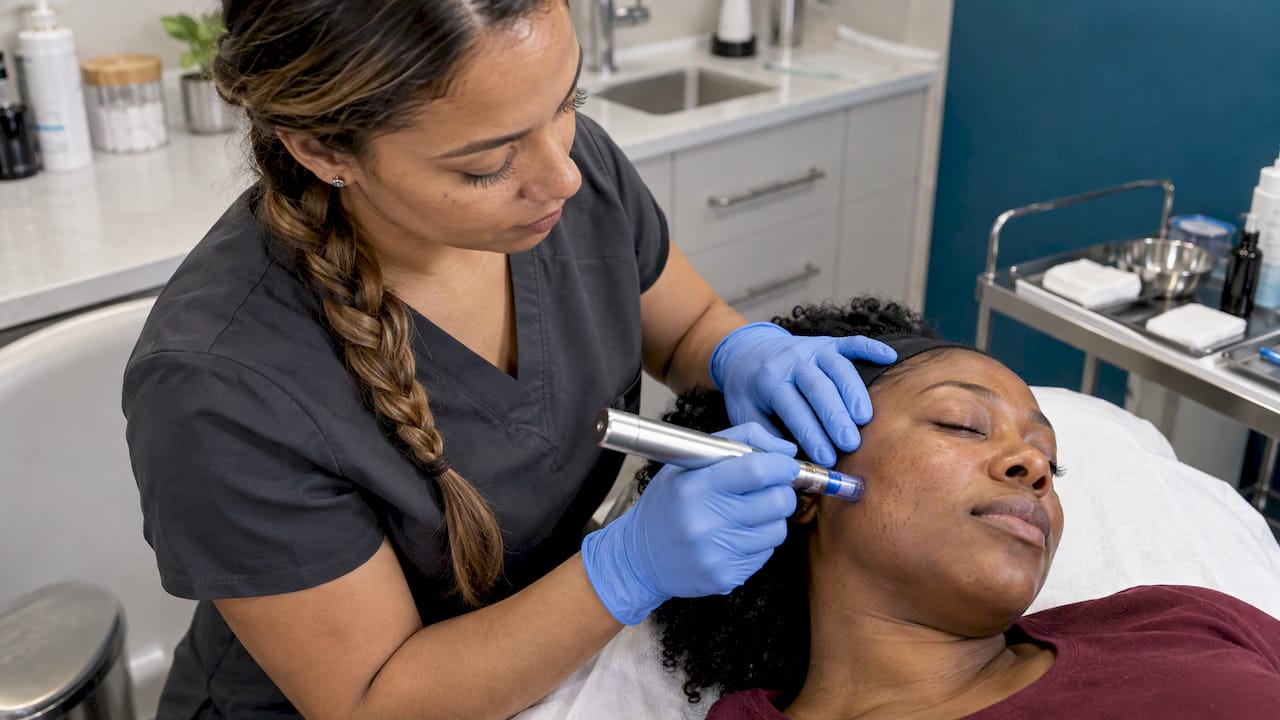
Two cautions apply. The AAD notes that at-home microneedling tools are not meant to puncture the skin and give less noticeable results than treatment by a dermatologist. And the FDA recommends choosing a health care provider trained to perform microneedling and using only FDA-authorized devices.
If scarring is your main concern, our guides on microneedling for acne scars and what to expect from acne scar microneedling go step by step. If you want to know how to care for your skin afterward, see our microneedling aftercare instructions. For those who want to go further on collagen repair, we also explain exosome microneedling.
Radiofrequency microneedling
Radiofrequency (RF) microneedling adds heat energy to the needling. A 2025 consensus paper on skin quality describes it as used to improve texture by remodeling skin and adipose tissue, often for tightening. It tends to suit people whose texture concerns come with early laxity: crepey skin, softening along the jawline, larger pores. Morpheus8 and Forma are among the radiofrequency and skin-tightening options we offer on our skin rejuvenation page.
Chemical peels
Peels remove the outer layers so smoother skin can replace them. They are a strong fit for roughness, dullness, and surface-level texture with some pigment. The Mayo Clinic lists the possible effects: redness, swelling, peeling, scarring, pigment changes and infection. Light peels take about one to seven days to heal. Deeper peels can give more dramatic results, but those may not be permanent.
Peel depth is chosen to match the problem. A light peel for dullness and a medium-depth treatment for more pronounced roughness are very different procedures, with very different downtime.
Facials and lasers
Medical-grade facials such as HydraFacial combine cleansing, exfoliation and hydration with no real downtime, which makes them a good maintenance step between stronger treatments. For texture with pigment, or for deeper resurfacing, lasers come into play. If you are weighing the two approaches, our comparison of chemical peel versus laser for skin resurfacing lays out how to choose. Our laser procedures page lists the laser options we use, including treatments for melasma and pigmentation.
Risks, downtime and realistic expectations
The more a treatment changes your skin, the more downtime it usually carries. Roughly:
| Approach | Typical downtime | Best for |
|---|---|---|
| Daily routine (SPF, moisturizer, retinoid or AHA) | None, with some adjustment irritation | Dullness, mild roughness, prevention |
| HydraFacial-style medical facial | Minimal | Surface roughness, maintenance |
| Light chemical peel | About 1 to 7 days of healing | Dullness, mild texture, light pigment |
| Microneedling | Short-term redness and sensitivity | Shallow scars, pores, general texture |
| RF microneedling | Short-term redness and swelling | Texture with early laxity |
| Laser resurfacing | Varies by laser and depth | Deeper texture, scars, pigment |
Skin tone matters when choosing. The Cleveland Clinic notes that people with darker skin tones have a greater risk of skin darkening after chemical peels. That does not rule out treatment, but it does mean the device, the peel type and the settings should be chosen by someone who treats a range of skin tones, and your first sessions should be conservative.
Set expectations too. Texture improves in stages, over weeks to months. Deep scars soften rather than vanish. Anyone promising perfect skin in one visit is selling something.
How to choose where to start
A short decision guide:
- Flaky, dull, rough, but no scars: fix the routine first (gentle exfoliation, moisturizer, SPF, a retinoid). Add a medical facial or light peel if you want faster results.
- Pitted acne scars or visible pores: microneedling or RF microneedling, usually in a series.
- Texture plus brown spots or melasma: treat pigment and texture together, with careful sun protection, rather than aggressive resurfacing alone.
- Texture with looseness: RF microneedling or another tightening approach.
- Bumps on arms and thighs: this is often keratosis pilaris, where dead cells clog hair follicles. It is harmless and usually improves with gentle chemical exfoliation and moisturizer.
If you are not sure which group you fall into, an in-person skin assessment saves months of trial and error.
Our perspective
Most people who come to us with texture concerns have already bought a drawer full of products. In our experience, the pattern is rarely too little care. It is the wrong care, or too much of it. So the first thing we do is look at what you are using now, and often we take something away.
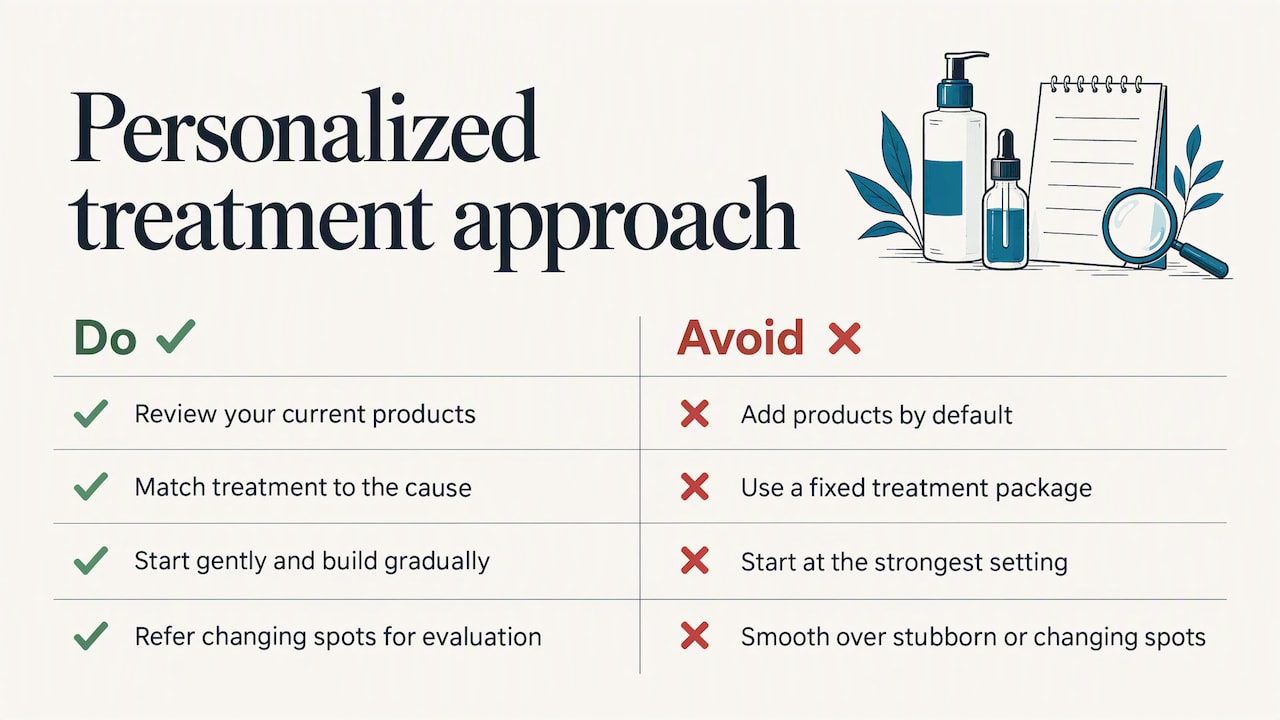
Then we match the treatment to the cause. Dr. Neetu Nebhwani is a board-certified Internal Medicine physician with more than ten years of experience, and every plan here is medically supervised and built around your specific skin concerns and goals, not a fixed package. We would rather start gentle, see how your skin responds, and build from there than push the strongest setting on day one. That matters most for deeper skin tones, for sensitive skin, and for anyone who has had a reaction before.
We also tell people when a treatment is not the answer. A stubborn or changing spot gets referred for a dermatology evaluation, not smoothed over.
— Neesh
Treatments for uneven skin texture at LA ViE MD
We offer microneedling, Morpheus8, Forma, chemical peels, HydraFacial and laser treatments in our Bay Area locations, with consultations for clients in Danville, Livermore, Dublin and Los Gatos. Your plan starts with a consultation where we assess your skin and talk through goals, downtime and sequence. See the full list on our skin rejuvenation treatments page, or look at microneedling in Danville or microneedling in Dublin to book a visit.
FAQ
Can uneven skin texture be fixed permanently?
Not entirely. Texture caused by buildup and dryness can improve a lot and stay improved with a consistent routine. Scars and collagen loss can soften with treatment, but sun exposure, aging and new breakouts keep acting on your skin. Maintenance, especially daily sunscreen, is what protects the results.
How often should I exfoliate to smooth my skin?
About once or twice a week is the typical dermatologist guidance. If your skin is dry, sensitive or acne-prone, choose a mild chemical exfoliant over a scrub. Stop and let your skin recover if you notice stinging, redness or new breakouts.
Does drinking water improve skin texture?
The evidence is weak. Reviews suggest extra water may slightly raise skin hydration mainly in people who drink very little, and a 2024 study found moisturizer outperformed extra water. Moisturizer and sunscreen will do more for your texture.
Is microneedling or a chemical peel better for texture?
It depends on the cause. Peels work on the surface, so they suit dullness and roughness. Microneedling works on collagen below the surface, so it suits scars and pores. Many people benefit from both at different stages, which is why we start with an assessment.
Is at-home microneedling worth it?
The AAD says at-home tools are not meant to puncture the skin and give less noticeable results than professional treatment. If you have scarring or want real change, treatment by a trained provider using authorized devices is the safer and more effective route.
Sources
- Dermatologists’ best tips for improving uneven skin texture, Women’s Health
- 13 dermatologist-approved tips to improve skin texture, Verywell Health
- How to safely exfoliate at home, American Academy of Dermatology
- Microneedling can fade scars, uneven skin tone, and more, American Academy of Dermatology
- Does dietary fluid intake affect skin hydration in healthy humans? PubMed, 2018
- Effect of amount of daily water intake and use of moisturizer, Journal of Clinical Medicine, 2024
- Nutrition and water: drinking eight glasses of water a day, PubMed, 2010
- When to see a dermatologist about a skin change, MD Anderson
- When should you see a dermatologist, Nebraska Medicine
- How to treat skin quality: a consensus-based treatment approach, Journal of Cosmetic Dermatology, 2025
- Microneedling devices, U.S. FDA
- Chemical peel, Mayo Clinic
- Chemical peels: types, conditions treated, Cleveland Clinic