Dysport for Wrinkles: What It Treats and What to Expect
Dysport is a prescription botulinum toxin that relaxes the small muscles behind frown lines, so the wrinkles between your brows soften and often fade. It works best on wrinkles that appear when you move your face. It does less for lines that are etched in at rest. Below we cover what it does, how fast and how long, who should skip it, and how it compares with Botox and Daxxify.
TL;DR
- Dysport is FDA-approved for moderate to severe frown lines (glabellar lines) in adults under 65. Other areas, such as the forehead and crow’s feet, are treated off-label by experienced injectors.
- Most people see results in 2 to 3 days, and they typically last 3 to 5 months.
- Dysport, Botox and Daxxify all relax muscles. The injector’s skill and your anatomy matter more than the brand name.
- Deeper lines that show at rest often need fillers or resurfacing alongside a neuromodulator.
- A consultation with a physician comes first. Pregnancy, certain neuromuscular conditions and a cow’s milk protein allergy rule Dysport out.
Table of Contents
- How Dysport smooths wrinkles
- What Dysport is approved to treat
- What to expect: timeline and results
- Dysport, Botox and Daxxify: how they differ
- When Dysport is not enough on its own
- Who should not get Dysport
- Our perspective
- Booking a consultation at LA ViE MD
- Preparing for your appointment
- FAQ
- Sources
How Dysport smooths wrinkles
Facial wrinkles come in two kinds. Dynamic wrinkles form when muscles contract: frowning, squinting, raising your brows. Static wrinkles are visible even when your face is relaxed.
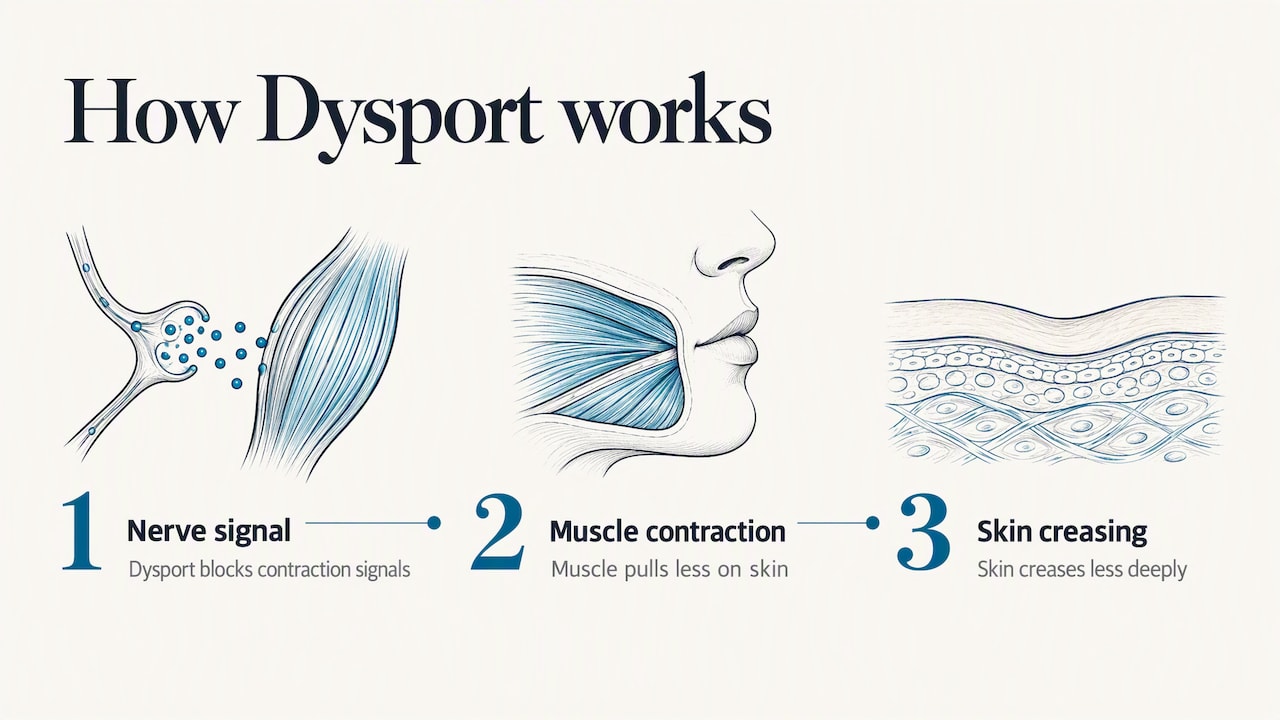
Dysport (abobotulinumtoxinA) is a type A botulinum toxin. It blocks the nerve signals that tell a muscle to contract. With the muscle quieter, the skin above it stops creasing as deeply. Botulinum toxin works on dynamic wrinkles because it temporarily paralyzes the muscles that create them, and the effect wears off as the nerve connection recovers.
That is why a neuromodulator is not a filler. It does not add volume. It changes how much your muscles pull on the skin.
What Dysport is approved to treat
The FDA label for Dysport covers the temporary improvement of moderate to severe glabellar lines in adults under 65. The labeled dose for that area is 50 units, divided into five equal injections of 10 units each.
In practice, physicians use Dysport in other upper-face areas too:
- Forehead lines. Dysport tends to spread slightly further from the injection point than Botox, according to Cleveland Clinic. Skilled injectors use that to soften broader areas like the forehead, but it takes precise technique to avoid affecting nearby muscles.
- Crow’s feet. The lines at the outer corners of the eyes respond to small, carefully placed doses.
- Brow positioning. Relaxing the muscles that pull the brows down can give a subtle lift.
Using a product outside its labeled indication is legal and common in medicine, but it is a good reason to choose a provider who maps muscle movement in detail rather than injecting by formula.
Under-eye wrinkles
Readers often ask whether Dysport can treat wrinkles under the eyes. The skin there is thin, and the muscle underneath supports the lower lid. Dose and placement are delicate, and a toxin that is too strong can affect how the eye looks and feels. Fine lines under the eyes are often better judged in person. In some patients, hollowing or crepey skin is the real cause, and that calls for a different approach, such as skin tightening, microneedling or, for suitable candidates, undereye filler.
What to expect: timeline and results
Here is the usual course after a Dysport session.
| When | What happens |
|---|---|
| Day of treatment | A few small injections, usually a quick visit. Small bumps or redness at the sites fade quickly. |
| 24 hours to 3 days | Some people notice changes within 24 hours, with a median onset of 2 to 3 days. |
| About 2 weeks | Full effect. This is when we assess symmetry and decide whether a touch-up is needed. |
| 3 to 5 months | Clinical studies show results generally last 3 to 5 months. Movement gradually returns. |
Repeat treatments should be spaced at least three months apart, per the same manufacturer information.
A touch-up around the two-week mark is routine, not a sign something went wrong. The first session is partly a discovery phase: it shows how your muscles respond, so the next dose can be tuned. Later visits tend to be more precise.
Duration also varies from person to person. A systematic review of abobotulinumtoxinA in the upper face looks at onset and duration across studies, and a split-face comparison of Dysport and Botox measured how long each lasted in the forehead. Your own metabolism, muscle strength and dose will decide your timeline more than any average.
Dysport, Botox and Daxxify: how they differ
People searching for one of these products usually want to know if another would suit them better. All three are botulinum toxin type A products that relax muscles. The differences are modest and mostly practical.
| Dysport | Botox | Daxxify | |
|---|---|---|---|
| Type | Botulinum toxin A | Botulinum toxin A | Botulinum toxin A, stabilized with a peptide rather than human albumin |
| FDA-approved cosmetic areas | Frown lines | Forehead lines, frown lines, crow’s feet | Frown lines |
| Typical onset | 2 to 3 days | A few days | A few days |
| Spread | Slightly wider | More contained | Provider-dependent |
| Duration | 3 to 5 months | Roughly similar range | Marketed as longer-lasting |
The approvals above come from Cleveland Clinic’s comparison for Botox and Dysport. Daxxify was FDA-approved for glabellar lines on the strength of the phase 3 SAKURA program, and its pitch is a longer duration than conventional options. We have written a separate side-by-side on Daxxify versus Botox if you are weighing those two.
The honest summary: neither Botox nor Dysport is inherently better. Physicians often note that the provider’s skill matters more than the brand, and it is common to try a different product to see which fits your face best. If one product wears off sooner than you hoped, switching is a reasonable experiment to discuss, not a failure.
When Dysport is not enough on its own
Dynamic wrinkles respond well. Static wrinkles, the ones visible at rest, are another matter. Deep creases from years of movement and sun exposure, as well as lines from volume loss, often need a mix of methods. The AAFP review of botulinum toxin for facial wrinkles notes that combining a neuromodulator with fillers or resurfacing can give better results than any one tool.
A practical way to think about it:
- Lines that appear only when you frown or squint: a neuromodulator is usually the first choice.
- Lines present at rest, with volume loss: fillers or a collagen-stimulating treatment may do more. See our comparison of Botox versus fillers and our guide to Sculptra and fillers.
- Fine lines and uneven texture: skin-quality treatments such as microneedling or radiofrequency microneedling help. Here is how Botox and microneedling work together.
- Wrinkles you want to prevent: smaller doses started early. Read about preventative Botox.
If you are in your 40s and wondering whether it is too late to start, it is not. Neuromodulators are used across adult age groups. What changes is the plan: the older the lines, the more likely you will want a second treatment alongside.
Who should not get Dysport
Safety comes before aesthetics. Tell your provider about all of the following before treatment:
- Pregnancy or breastfeeding. Botulinum toxin is generally not recommended because there is not enough evidence about safety for an unborn child or infant.
- Neuromuscular disorders such as myasthenia gravis, and an active infection at the injection site, which are listed as common contraindications in the same AAFP review.
- Known hypersensitivity to any botulinum toxin or its ingredients.
- A cow’s milk protein allergy. The FDA label lists this as a contraindication for Dysport, because it may contain trace amounts of milk protein.
The Dysport medication guide also describes rare but serious side effects, including problems breathing or swallowing. If you have trouble breathing, swallowing or speaking after any toxin treatment, seek medical care right away and call the clinic that treated you.
Common, mild effects include redness, small bumps and a heavy feeling where the injections went in. A temporary droopy brow or lid can happen when the toxin affects a nearby muscle, which is why placement matters.
Aftercare in plain terms
You will hear advice such as staying upright for a few hours and skipping a hard workout the same day. These are precautions meant to reduce the chance of the toxin moving, rather than rules proven in clinical trials. They cost you very little, so we ask patients to follow them. Do not rub or massage the treated areas.
Our perspective
We see the same pattern again and again: people arrive asking for a brand, when what they need is a plan. The product matters less than three things.
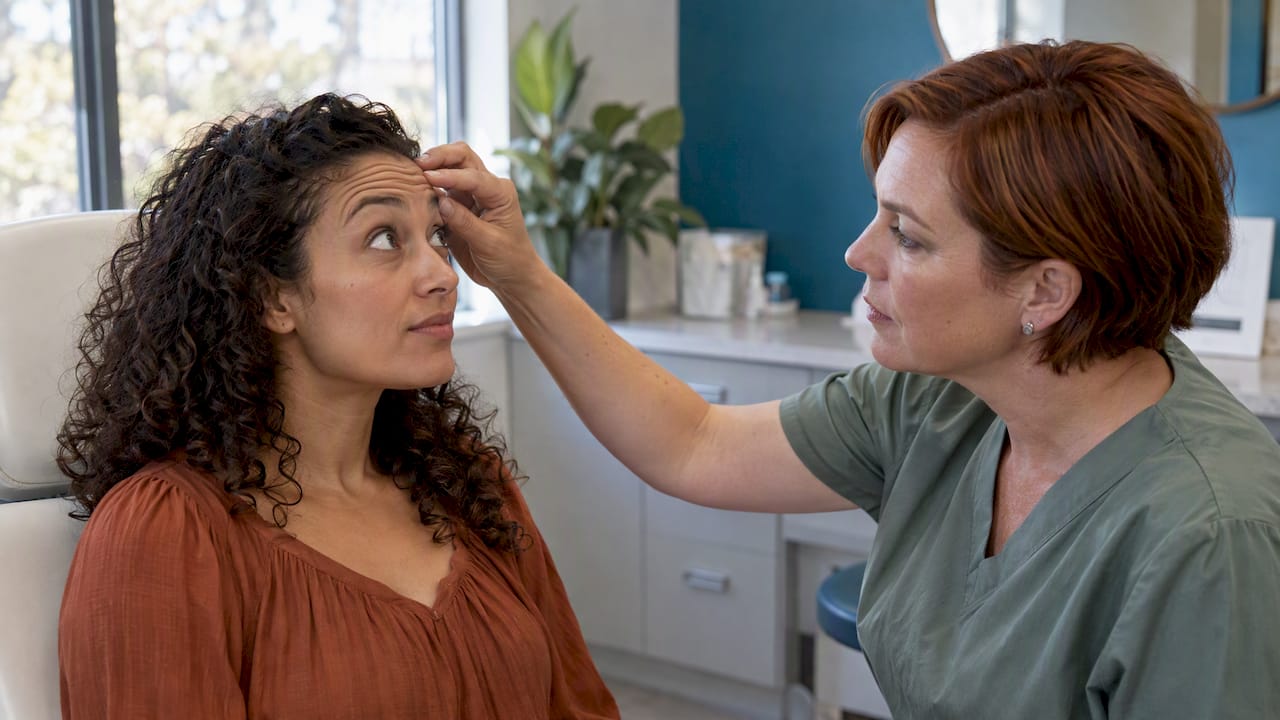
Mapping before injecting. Every face moves differently. Before treating, we watch how you frown, squint and raise your brows, then decide dose and placement from what we see. Two people with the same lines can need quite different treatments.
Honest expectations. A neuromodulator will soften movement lines. It will not fill a crease or replace lost volume. When a patient’s concern is mostly static lines or hollowing, we say so and build a plan with other tools instead of adding more toxin.
Medical supervision. LA ViE MD is led by Dr. Neetu Nebhwani, a board-certified Internal Medicine physician with more than ten years of experience. Contraindications such as allergies, pregnancy and neuromuscular conditions are reviewed in your consultation, not skipped for speed. A touch-up at two weeks is part of how we fine-tune your dose, and we plan for it.
If you want to try a different product after a first round, that is a normal conversation to have with us.
— Neesh
Booking a consultation at LA ViE MD
We offer Botox and other injectables at our Bay Area medical spa, with custom treatment plans based on your skin concerns and goals, and we welcome patients from Danville, Livermore, Dublin and Los Gatos. Your first visit is a consultation: we review your history, assess your muscle movement, and tell you whether a neuromodulator, filler or a skin treatment is the right first step.
See our injectables page for what we offer, or read about our wrinkle treatment approach. If it is your first time, our guide on preparing for your first Botox appointment covers what to do beforehand. Pricing is set after your consultation, because dose and areas differ for each patient.
Preparing for your appointment
A few habits make the visit smoother:
- Bring a list of medications and supplements, and tell us about any prior toxin treatments and how they went.
- Come without heavy makeup if you can, so we can see your skin and movement.
- Think about your goal in plain words: “softer frown lines” or “less tired-looking eyes” is more useful than a product name.
- Plan your calendar: results build over about two weeks, so schedule treatment well ahead of a big event.
FAQ
Does Dysport actually work for wrinkles?
Yes, for the right kind. It is FDA-approved for moderate to severe frown lines, and it softens wrinkles caused by muscle movement. Deeper lines present at rest usually improve less and may need fillers or resurfacing too.
Is Dysport better than Botox for wrinkles?
Neither is inherently better. Both treat dynamic wrinkles, and the choice often comes down to how your body responds and what your provider prefers. Botox has FDA approval for more cosmetic areas, while Dysport may spread slightly further, which can suit the forehead.
How long does Dysport take to work, and how long does it last?
Most people notice a change in 2 to 3 days, and the full effect shows at about two weeks. Results generally last 3 to 5 months. Treatments should be at least three months apart.
Is 40 too late to start?
No. Adults of many ages are treated with neuromodulators. At 40 and beyond, you may have some lines at rest, so we often pair a toxin with fillers or skin treatments after assessing your face.
Can Dysport be used for under-eye wrinkles?
Sometimes, in tiny, carefully placed doses, but it is a delicate area and not right for everyone. Under-eye concerns often come from volume loss or thin skin, so an in-person exam is the way to decide.
Sources
- Dysport prescribing label, FDA
- Dysport medication guide, Galderma
- Discover Dysport, Dysport USA
- Botox vs. Dysport: What’s the Difference?, Cleveland Clinic
- Botulinum Toxin Injection for Facial Wrinkles, AAFP
- Cosmetic Use of Botulinum Toxin, Review of Ophthalmology
- Onset and Duration of AbobotulinumtoxinA in the Upper Face, JCAD
- Duration of Action of AbobotulinumtoxinA and OnabotulinumtoxinA, PMC
- FDA Approves Daxxify for Glabellar Lines, HCPLive