
Dark Spots on Face: Causes, Types and What Fades Them
Dark spots on the face are patches of skin where extra pigment (melanin) has collected, and the way to fade them depends on what caused them. Sun spots, post-acne marks and melasma can look alike, yet they respond to different treatments. The fastest route to clearer skin is to identify the type first, protect the skin from sun every day, and bring in a physician when home care stalls. At LA ViE MD, Dr. Neetu Nebhwani, a board-certified Internal Medicine physician, builds custom treatment plans around each client’s skin concerns and goals, so the plan starts with the cause, not a guess.
TL;DR
- Dark spots (hyperpigmentation) come from sun exposure, past breakouts or irritation, hormonal shifts and some medications. The cause decides the treatment.
- Daily sunscreen is the base of every plan. The American Academy of Dermatology (AAD) says treatment begins with sunscreen, and tinted formulas with iron oxide help block visible light.
- Gentle products and patience work for mild spots. Stubborn spots often need prescription-strength care or in-office treatment.
- Peels, microneedling, HydraFacial and laser can all help, but the right one depends on your skin tone and spot type.
- Any spot that changes, bleeds or looks different from the others should be examined by a physician before anything is done to it.
Table of Contents
- What dark spots on the face actually are
- Why you are getting dark spots: the common causes
- A quick way to tell which type you have
- What helps at home
- Treatment for dark spots on the face: what a physician can offer
- Why timing and sequence matter
- Fading dark spots in deeper skin tones
- Mistakes that keep dark spots around
- Our perspective on dark spots
- Treat your dark spots with a plan built for your skin
- FAQ
- Sources
What dark spots on the face actually are
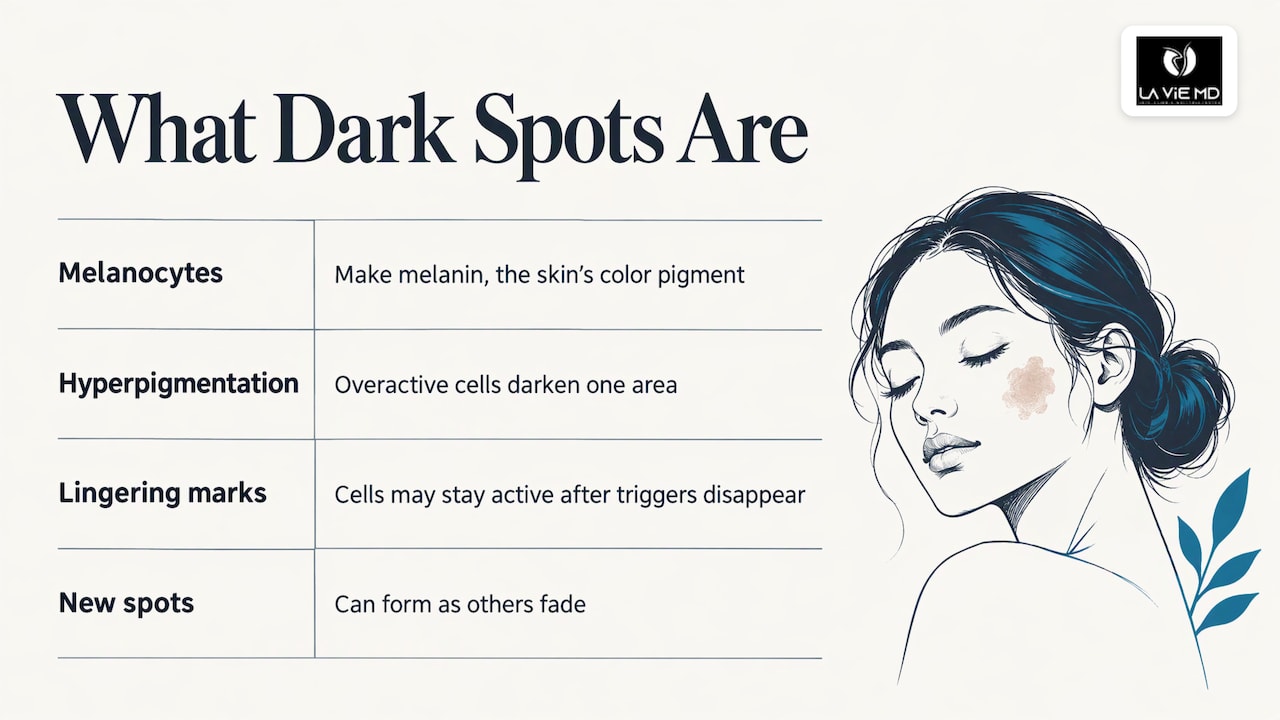
Your skin gets its color from melanocytes, cells that make melanin. When those cells become overactive in one area, that area looks darker than the skin around it. Doctors call this hyperpigmentation. Dark spots, brown spots, age spots and patches are all versions of it.
The spots are usually harmless, but they are also stubborn. Melanocytes can stay active long after the original trigger is gone, which is why a mark from a breakout two years ago may still be there. The AAD notes that dark spots and patches are one of the most common reasons people with darker skin tones see a dermatologist, and that new spots can form as others fade unless the cause is addressed.
Why you are getting dark spots: the common causes
The most useful question is not “how do I remove this?” but “why is it here?” These are the usual answers.
Sun exposure
UV light is the biggest driver. Years of exposure create flat tan or brown spots, often called sun spots or solar lentigines, on the cheeks, forehead, nose and temples. They tend to appear later in life, but heavy sun in your twenties and thirties shows up too. In the Bay Area, where a cool morning can turn into a bright, high-UV afternoon in Danville, Livermore or Dublin, daily exposure adds up even when it never feels like a beach day.
Post-inflammatory hyperpigmentation
This is the dark mark left after skin has been inflamed: an acne breakout, a scratch, eczema, a harsh peel or a reaction to a product. It is especially common in medium to deep skin tones. Picking at blemishes makes it more likely and more lasting.
Melasma
Melasma shows up as larger, blotchy patches, often symmetrical on the cheeks, upper lip or forehead. Hormonal changes (pregnancy, birth control, hormone therapy) and sun exposure are well-known triggers. It is one of the trickiest types, because heat and light can make it return. We cover it in detail in our guide to melasma treatment, what works and what to avoid.
Medications and products
Some medications and skincare ingredients can make skin more sensitive to sun or cause patchy darkening. The AAD page lists medications as a possible cause and suggests trying gentler products if irritation may be involved. If you suspect a medication, talk to the physician who prescribed it before changing anything.
A quick way to tell which type you have
Only an in-person exam can confirm a diagnosis, but this table shows how the types usually differ.
| Type | What it looks like | Where it shows up | Common trigger |
|---|---|---|---|
| Sun spots | Small, flat, tan to brown, clearly outlined | Cheeks, nose, forehead, temples | Cumulative UV exposure |
| Post-inflammatory marks | Flat pink, brown or dark marks, shaped like the old blemish | Wherever you had acne or irritation | Breakouts, picking, irritation |
| Melasma | Larger, blotchy, often symmetrical patches | Cheeks, upper lip, forehead | Hormones plus sun and heat |
| Raised brown spots | Slightly raised, sometimes waxy or rough | Face, neck, body | Need a physician to identify |
A raised spot, a spot with uneven color or edges, or a mark that has grown, bled or changed recently is not a cosmetic question first. Have a physician examine it before any treatment, since cosmetic lightening should never be used on a spot that has not been identified.
What helps at home
Mild spots, especially recent post-acne marks, often respond to a steady routine. Three habits matter more than any single product.
1. Sunscreen every day
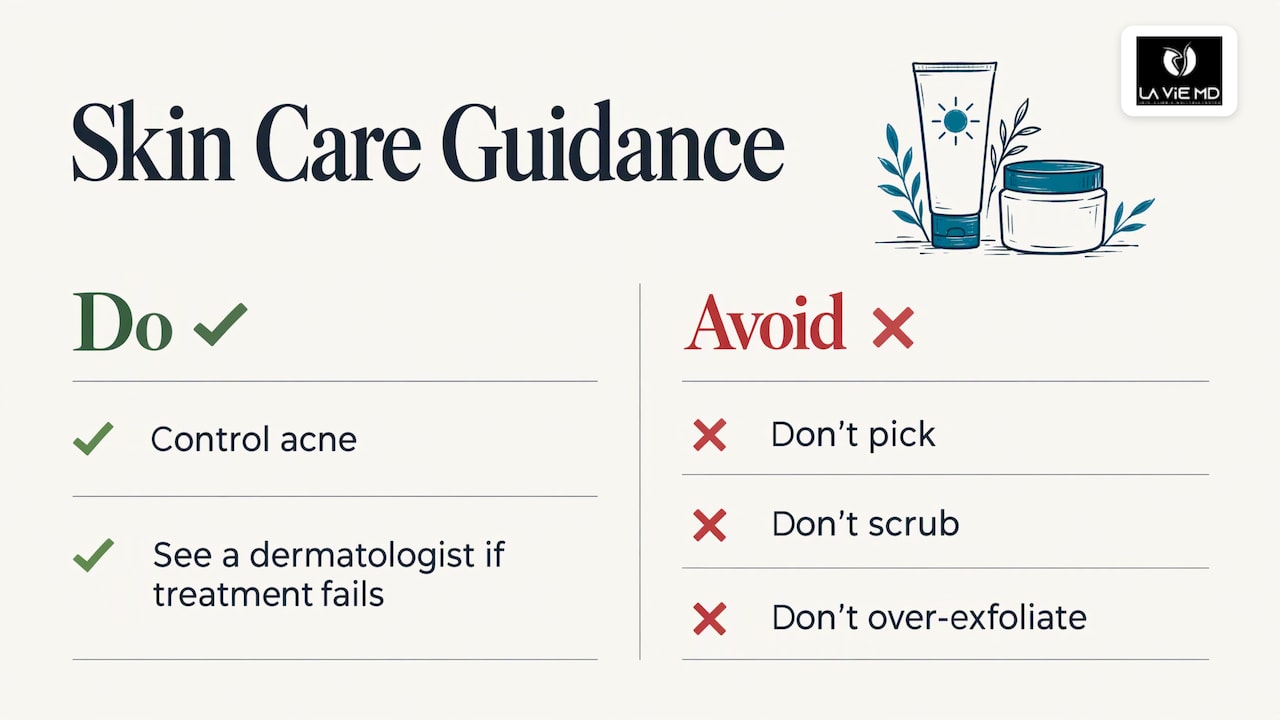
Sun exposure can create new spots and darken existing ones, so lightening products work against a moving target without it. The AAD recommends a tinted sunscreen with iron oxide to protect against visible light, which is a cause of dark spots. Apply it every morning, reapply if you are outdoors, and add a hat for long days. Most people skip this step in winter, and spots return.
2. Gentle, consistent skincare
Irritation can cause more marks, so harsher is not better. Look for brightening ingredients such as vitamin C, niacinamide and azelaic acid, introduce one at a time, and give each at least a few weeks before judging it. Stop anything that stings or causes redness lasting more than a day.
3. Hands off
Picking, scrubbing and over-exfoliating all create new inflammation. If breakouts are the source of your marks, controlling acne is part of fading them.
Home care has a ceiling. The AAD advises seeing a dermatologist if your treatment fails to deliver the results you want, and notes that some dark spots and patches need prescription-strength treatment. If you have used sunscreen and a sensible routine for about three months with little change, it is time for a professional evaluation.
Treatment for dark spots on the face: what a physician can offer
In-office treatment works by targeting pigment more precisely and for a more controlled amount of time than a store-bought product can. The right option depends on the spot type and your skin tone, which is why the consultation matters more than the device.
Medical-grade skincare
Professional-strength topical products are the base of most plans. They support in-office treatments, help prevent a return of spots and keep results going. We sell medical-grade skincare products at LA ViE MD, and your physician can build a routine around your skin rather than a generic one.
Chemical peels
A peel applies a solution that exfoliates the top layers of skin so that pigmented cells are shed and fresh skin comes through. Peels suit many sun spots and post-acne marks, and a series of lighter peels often works better than one aggressive peel, particularly in deeper skin tones where irritation can cause more pigment. Our hyperpigmentation treatment page outlines how we approach this.
Microneedling and HydraFacial
Microneedling uses tiny needles to trigger the skin’s repair response, improving texture and tone. HydraFacial cleanses, exfoliates and infuses the skin with serums in a single, comfortable session with no downtime to speak of. Both are on our skin rejuvenation treatments page and can be paired with a pigment-focused plan.
Laser treatment
Picosecond lasers deliver very short bursts of energy that break pigment into tiny particles the body clears away. Our PicoWay laser is used for melasma and pigmentation. Laser settings need to be matched to skin tone and the specific spot, which is why it is done under physician supervision.
Radiofrequency and fractional options
Treatments like Morpheus8 and the Tetra CoolPeel CO2 laser are designed to improve overall skin quality, texture and tone. Your physician can tell you whether they belong in your plan or whether a simpler approach fits better.
Why timing and sequence matter
Pigment treatment is a series, not a single appointment. A typical plan moves through these stages:
- Evaluation. Your physician looks at the spots, asks about medications, hormones, sun habits and past reactions, and identifies the type.
- Calm and protect. Sunscreen and gentle products come first, particularly if skin is inflamed or reactive.
- Treat. Peels, microneedling or laser are chosen to match the spot type, usually in a series of sessions spaced weeks apart.
- Maintain. Daily sunscreen and a medical-grade routine keep new spots from forming.
Skipping step two is the most common mistake. Aggressive treatment on irritated skin is how a light spot becomes a darker one.
Fading dark spots in deeper skin tones
Deeper skin tones make more pigment in response to injury, so the same peel or laser that is safe in lighter skin can leave new dark marks if the settings are too strong. That is not a reason to avoid treatment. It is a reason to see someone who adjusts to your skin. The AAD’s guidance for darker skin tones emphasizes finding the cause first and using gentler products. Ask during your consultation how the plan is adjusted for your skin tone and what the first, conservative step looks like.
Mistakes that keep dark spots around
- Skipping sunscreen on cloudy days. UV still reaches skin, and visible light plays a role too.
- Switching products every two weeks. Pigment fades slowly, and most routines need weeks to show anything.
- Using strong acids all at once. Irritation produces more pigment.
- Treating a spot you have not identified. If it is raised, changing or irregular, have it checked first.
- Stopping after the first good result. Without maintenance and sun protection, spots return.
Our perspective on dark spots
Most people come in having already tried several products. What they have not had is someone look at the skin and ask why the spots formed. That question is where a plan should start.
At LA ViE MD we do not treat dark spots with one device for everyone. We evaluate the skin, identify the type, and build a plan around your concerns and goals, using medical-grade skincare along with treatments such as peels, microneedling, HydraFacial and PicoWay laser when they fit. Having a board-certified physician supervise that plan means the spot is assessed properly and the treatment is matched to your skin, not to a menu.
Our aim is skin that looks like yours, only clearer and more even. Sunscreen and patience do the long-term work, and we are here to make the in-office part precise and safe.
Dr N
Treat your dark spots with a plan built for your skin
If you live in Danville, Livermore, Dublin or Los Gatos, LA ViE MD offers physician-supervised hyperpigmentation care, with custom plans based on your specific skin concerns. Treatments include PicoWay laser for melasma and pigmentation, microneedling, HydraFacial and medical-grade skincare. Start with a consultation to find out what is behind your spots and which treatment fits.

You can see how we approach pigmentation on our hyperpigmentation treatment page, or look at all of our skin rejuvenation treatments. Prefer to be seen close to home? We have pages for Danville, Livermore and Los Gatos.
FAQ
Why am I getting dark spots on my face?
The most common reasons are sun exposure, marks left by acne or irritation, hormonal changes and certain medications. Often more than one factor is involved. A physician can tell which applies to you by examining the spots and asking about your history.
Does vitamin C get rid of dark spots?
Vitamin C is an antioxidant used in many brightening routines, and it can help mild spots look lighter over time when used consistently with daily sunscreen. It works gradually, so give a product several weeks before judging it. For spots that do not respond, your physician can recommend stronger, medical-grade options.
Can dark spots go away on their own?
Some fade slowly, especially post-acne marks, once the trigger is gone and the skin is protected from the sun. Others, like sun spots and melasma, tend to stay or return without treatment and sun protection. Because new spots can form as old ones fade, the AAD stresses addressing the cause as well as the spot.
What should I do about a raised or changing dark spot?
Have a physician examine it before you try to lighten or remove it. A spot that is raised, has uneven color or edges, or has recently grown, bled or changed should be identified first. Cosmetic treatment is only appropriate once that is done.
How long does it take to fade dark spots?
It varies with the type, depth and your skin tone, but expect weeks to months, not days. Most plans combine a series of treatments with a daily routine. Your physician can give you a realistic timeline after seeing your skin.