Customized Facial Treatments: How a Personalized Plan Works
A customized facial is a skin treatment built around your skin type, your concerns and your goals. A standard facial follows a set routine. A customized one starts with a skin assessment, then adjusts the steps, products and technology to what that assessment shows. At LA ViE MD, that process is led by a board-certified physician, Dr. Neetu Nebhwani, and your plan is designed around you, not around a menu.
Below, you’ll find what happens at each step, which treatments can be part of a plan, what facials usually cost, how often to book, and what to tell your provider so the plan is safe for your skin.
TL;DR
- A customized facial begins with a skin analysis, and the steps and products are chosen from the results, not from a fixed script.
- Your plan should change with your age, the season and how your skin is doing that month.
- Most professional facials cost between $75 and $200 and take about an hour. Medical-grade options such as HydraFacial or microneedling are quoted at consultation.
- Every four to six weeks is the usual rhythm, because it matches your skin’s roughly 30-day cycle.
- Tell your provider about recent injections, sun exposure, medications and skin conditions before any exfoliating step.
Table of Contents
- What makes a facial customized
- How your skin is assessed
- Your plan should change over time
- What a customized facial can include
- Types of facial treatments and how a provider chooses
- What results to expect
- How often to book
- What a customized facial costs
- Safety checks and preparation
- Our perspective
- Book a personalized skin consultation
- How to get the most from a customized facial
- FAQ
- Sources
What makes a facial customized
A facial is a noninvasive treatment that includes cleansing, moisturizing, exfoliating and other steps tailored to your skin type and needs, performed by licensed skin care professionals such as aestheticians, as Cleveland Clinic describes it. The word “customized” is what separates a plan from a package.
In a package facial, everyone gets the same sequence. In a customized facial, the provider decides each step after looking at your skin. Someone with dehydrated, sensitive skin may skip a strong exfoliation and get extra hydration. Someone with congestion and uneven tone may get a deeper cleanse, a different serum and a treatment aimed at pigment.
Three things usually define a truly personalized visit:
- A real assessment first. Not a quick glance, but questions and a close look at your skin.
- Choices that follow the findings. Exfoliation type, serums, masks and technology are picked for your skin that day.
- A plan beyond one visit. What to do next, how often to return and what to use at home.
This is also what people mean when they search for personalized skincare treatment: a plan that reflects their skin rather than a generic routine.
How your skin is assessed
The assessment is where personalization happens. One professional guide to skin assessments says a thorough one should include a visual assessment, a review of your medical history and lifestyle, and a discussion of your expectations. It also notes that clinical photographs document your baseline and that consent forms should be reviewed and signed (The Naked Chemist).
The same source says practitioners should assess your Fitzpatrick skin type, especially when planning treatments that carry a higher risk of post-inflammatory pigmentation. That is a practical point. Two people can have the same concern, such as dark spots, and need very different approaches because their skin responds differently to heat, acids or light.
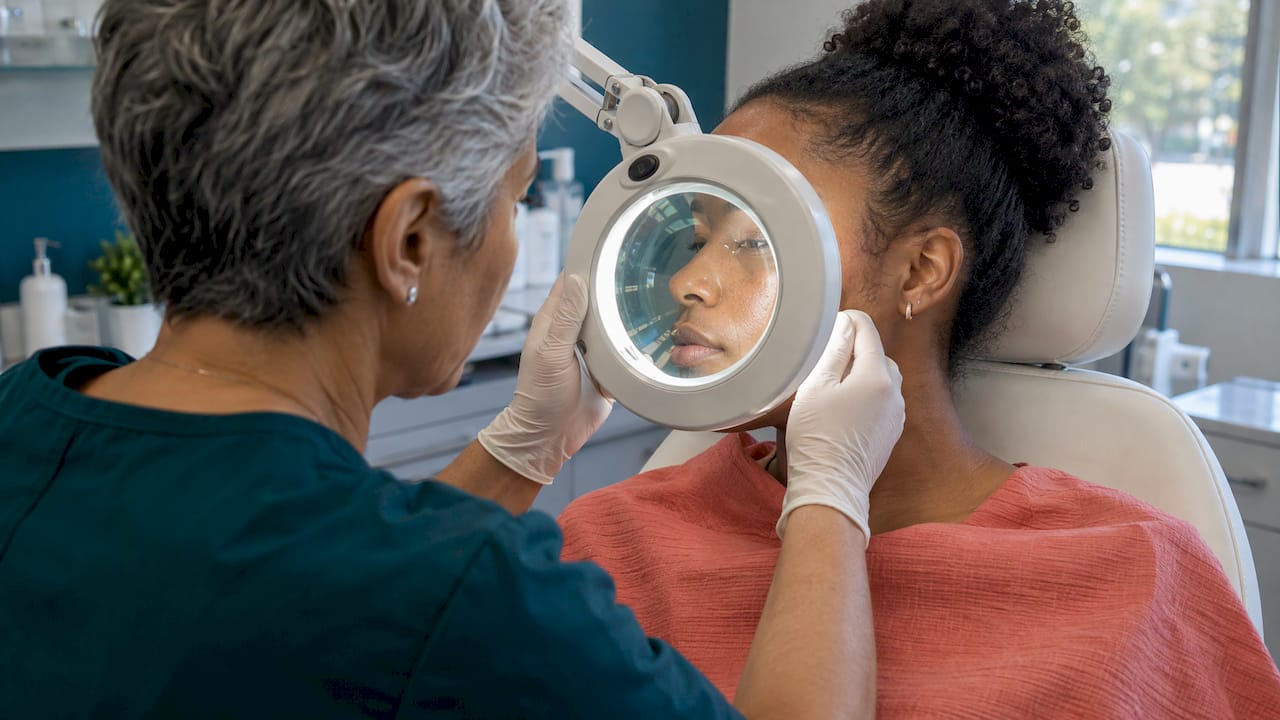
The analysis that follows cleansing is, in the words of one dermatology education site, arguably the most valuable part of any facial, since a trained eye using magnification can spot concerns you’ve been missing and adjust the protocol.
What we ask and look at
At LA ViE MD, we build a custom treatment plan around your specific skin concerns and aesthetic goals. A consultation typically covers:
- What bothers you most: texture, breakouts, fine lines, dullness, pigment, loss of firmness.
- Your current routine and products, including anything prescription.
- Your health history, medications and any recent procedures.
- Sun exposure habits and how your skin reacts to new products.
- Your goals and timeline, such as a steady glow-up or an event several weeks away.
Because our care is medically supervised, health factors are part of the conversation from the first minute.
Your plan should change over time
A personalized plan is not a one-time decision. Jamie Reeves of School of Dermatology advises choosing a provider who performs a thorough skin analysis at each visit and adjusts treatment accordingly, noting that your protocol at 25 should look different from your protocol at 45, and that your summer facial should differ from your winter facial.
In practice, that can look like this:
- Summer: more attention to sun-related pigment and hydration, with careful timing around sun exposure.
- Winter: barrier support and moisture for dry, reactive skin.
- Your 20s and 30s: prevention, clarity and tone.
- Your 40s and 50s: firmness, texture and collagen support.
If you live in Danville, Livermore, Dublin or Los Gatos, the long dry Bay Area summers and strong UV are worth mentioning at every visit, because they shape what your skin needs.
What a customized facial can include
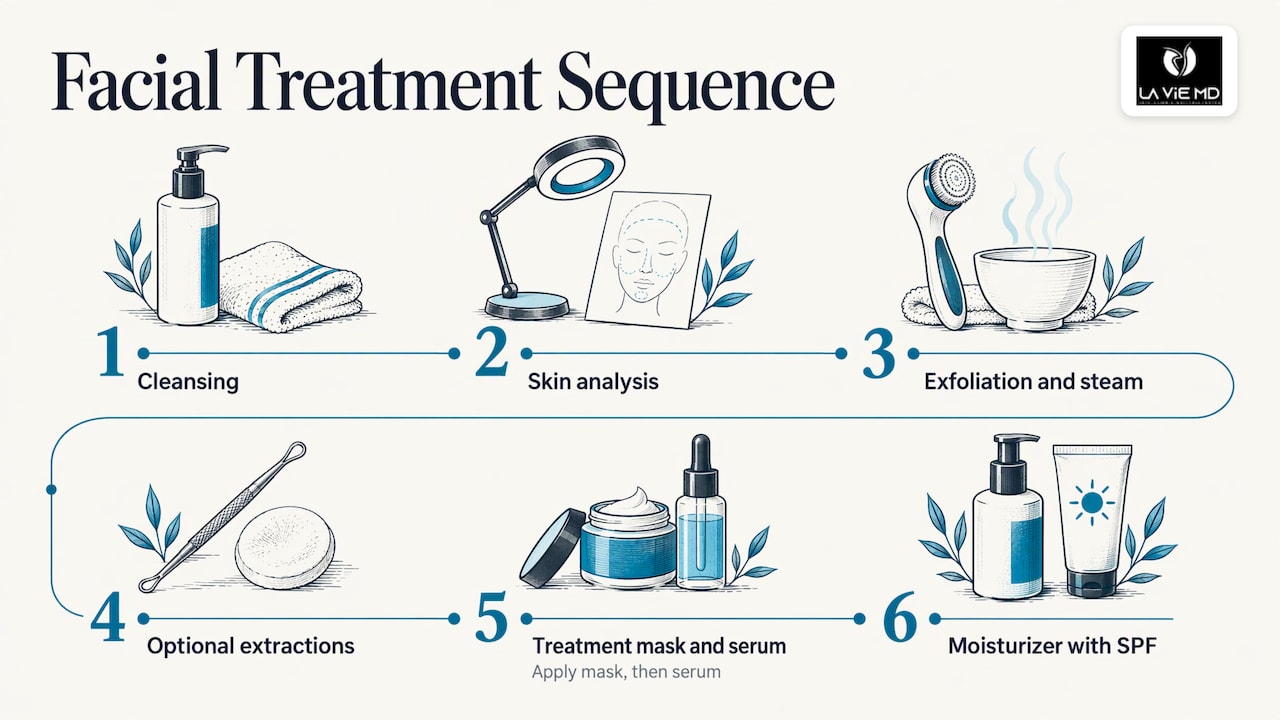
A standard professional facial follows a predictable order: cleansing, skin analysis, exfoliation, steam, optional extractions, a treatment mask, serum application and a moisturizer with SPF, according to School of Dermatology. Customization happens inside that frame, and for some goals, beyond it.
Within the facial itself
The provider can change the exfoliation (gentle or deeper), choose whether extractions are needed, pick a mask for oil control, calming or hydration, and select serums for your concerns. Each of these is a decision, not a default.
Medical-grade facials
A HydraFacial combines cleansing, exfoliation and hydration in one treatment, and boosters can be chosen for your concerns. We also offer HydraFacial Keravive for the scalp and skin through our esthetician services. If you are weighing a medical-grade facial against a manual one, our guide to dermaplaning or HydraFacial walks through the difference, and our page on HydraFacial treatment durations explains how long a visit runs.
Add-ons and next-step treatments
When your assessment points to concerns that a facial alone is not designed to address, your plan can include other options from our skin rejuvenation treatments:
- Microneedling and exosome microneedling for texture and collagen support.
- Morpheus8 and Forma for radiofrequency-based skin tightening.
- Chemical peels, which our guide on chemical peel or laser helps you compare with resurfacing lasers.
- PicoWay for melasma and pigmentation, part of our laser procedures.
- Red light therapy as a complement to a skin plan.
- Injectables such as Botox, dermal fillers and Sculptra for lines and volume, listed on our injectables page and covered in our wrinkle treatment overview.
Not every client needs any of these. A good plan adds only what your skin and goals call for.
Types of facial treatments and how a provider chooses
Facials fall into a few broad families, and the choice depends on your skin:
| Type | Typically chosen for | What it involves |
|---|---|---|
| Classic or hydrating facial | Dull, dry or maintenance skin | Cleansing, gentle exfoliation, mask, serum, SPF |
| Medical-grade facial (such as HydraFacial) | Congestion, uneven texture, dehydration | Device-assisted cleansing, exfoliation and serum infusion |
| Dermaplaning | Dullness and rough texture | Manual removal of dead skin cells and fine facial hair |
| Chemical peel | Tone, texture, mild pigment | Controlled application of exfoliating acids |
| Microneedling | Texture, scarring, fine lines | Tiny controlled micro-injuries that prompt the skin’s repair response |
| Radiofrequency (Morpheus8, Forma) | Early laxity and firmness | Heat delivered to deeper skin layers |
| Laser (such as PicoWay) | Pigmentation and melasma | Targeted light energy |
Your provider narrows this list using your skin type, sensitivity, history and how much downtime you can accept. Someone with an event next week usually needs a different plan than someone who can commit to a series over several months. We choose among these options under physician supervision, and your plan is written down so you know what comes next.
What results to expect
Professional facials work through exfoliation and circulation. Cleveland Clinic’s Kanaan explains that regular facials help your skin shed continuously, bring forth new skin, shrink the look of pores, lessen oil production, reduce hyperpigmentation, balance pH and increase blood circulation that supports collagen production.
Here is a realistic way to think about it:
- Right after: skin often looks fresher and more hydrated. Some redness is common after exfoliation or extractions and usually settles quickly.
- Over a series: tone, clarity and texture improve as your skin turns over and your plan builds on itself.
- Deeper concerns: pigment, lines and laxity often respond to a combination of facials and targeted treatments, which is why a plan beats a single visit.
Results vary from person to person, and we do not promise a specific outcome. Our approach is designed to move you toward your goals in steps your skin can handle.
How often to book
The right frequency depends on your skin issues. Cleveland Clinic says every four to six weeks is ideal because it lines up with your skin’s natural cycle of about 30 days.
A simple way to start:
- Book an initial consultation and first treatment.
- Return in four to six weeks for a second visit, adjusted to how your skin responded.
- Settle into a maintenance rhythm, adding stronger treatments in a series when your goals call for them.
What a customized facial costs
Most professional facials cost between $75 and $200 and take about an hour, according to Medical News Today. Medical-grade facials and add-on treatments cost more, and the figure depends on the device, the area and the number of sessions. We do not publish set prices for our treatments, because a customized plan is quoted after your consultation, once we know what your skin needs.
It helps to think in annual terms. One consumer-spending analysis puts what the average American spends on professional facials alone at $1,800 to $2,400 per year, and it estimates a mid-range $120 monthly facial with tip, transport and products at about $2,268 a year.
Facials are typically not covered by insurance, as Cleveland Clinic notes. Our page on insurance and aesthetic procedures explains how that works for our services, and our guide to making aesthetic treatments affordable offers practical ways to plan a budget.
Safety checks and preparation
The assessment is also a safety screen. Some conditions and situations change what is appropriate on your treatment day.
The California Board of Barbering and Cosmetology advises against chemical exfoliation if your skin is irritated or inflamed, or if you have open wounds, a rash, recent scar tissue, cold sores, moles, warts or pimples. It also lists having recently had Botox or collagen injections, being waxed or shaved within the past 24 hours, having lupus or AIDS, being in cancer therapy, long direct sun exposure, a tanning bed in the past 24 hours, or being sunburned (California Board of Barbering and Cosmetology).
Before your visit, tell your provider about:
- Recent Botox, filler or other injections.
- Waxing, shaving or hair removal in the past day.
- Sun exposure, sunburn or tanning in recent days.
- Any active breakouts, cold sores, rashes or irritation.
- Medical conditions and treatments, including cancer therapy or autoimmune conditions.
- Prescription and over-the-counter skincare, including retinoids and exfoliating acids.
If you have a condition such as lupus, or you are in cancer treatment, talk with your own physician as well, so your skin plan fits your overall care.
Looking at the whole picture
Skin reflects more than products. Sleep, stress, nutrition and general health all show up on your face, which is one reason a physician-led assessment looks at your history and lifestyle. If you like to read up on wellness approaches that involve light, this overview of photobiomodulation benefits and dosage is a good starting point for the questions to bring to your provider.
After your treatment
Aftercare depends on what was done. As a general habit, use a gentle cleanser, moisturize, and wear sunscreen every day, since the last step of a standard facial is a moisturizer with SPF for a reason. Your provider will give you specific instructions, including what to avoid and for how long.
Our perspective
We built LA ViE MD around one idea: your skin is not a menu item. Every plan we write starts with listening, then looking, and only then choosing a treatment.
Dr. Nebhwani is a board-certified Internal Medicine physician with over ten years of experience, and that background shapes how we work. We look at your medical history, your skin type and your goals together, because the safest and most effective plan accounts for all three.
That is why a customized facial with us can lead in different directions. For one client it stays a HydraFacial series with a smart home routine. For another it grows into microneedling, radiofrequency tightening or laser treatment for pigment. Our technology is advanced, but the plan matters more than the device.
If you have been getting the same facial for years and wondering why your skin is not changing, a physician-led assessment is a good place to reset.
Dr N
Book a personalized skin consultation
If you live in Danville, Livermore, Dublin or Los Gatos, we can build a plan around your skin. We offer HydraFacial, microneedling, Morpheus8, Forma, chemical peels, laser procedures and injectables, all under the supervision of a board-certified physician.
Start on our skin rejuvenation treatments page to see what’s available, or visit LA ViE MD to request a consultation. Dublin clients can also see our facial treatment options in Dublin.
How to get the most from a customized facial
- Be specific about your goals. “Less visible pigment by spring” gives your provider more to work with than “better skin.”
- Bring your product list. Active ingredients affect what is safe on treatment day.
- Choose a provider who reassesses each time. Your skin changes, and so should the plan.
- Keep sun protection consistent. It protects your results and your skin’s long-term health.
- Think in series. Most meaningful change comes from a plan over several visits, not a single appointment.
FAQ
How is a customized facial different from a regular facial?
A regular facial follows a fixed sequence for everyone. A customized facial starts with a skin analysis and then changes the exfoliation, masks, serums and technology to match your skin that day. It also comes with a plan for future visits and home care.
How long does a customized facial take?
Most professional facials take about an hour, according to Medical News Today. A medical-grade facial or a first visit with a consultation may take longer, and your provider will tell you what to expect when you book.
How often should I get one?
Every four to six weeks is the usual recommendation, since it matches your skin’s cycle of about 30 days. Your provider may suggest a different rhythm depending on your concerns and any stronger treatments in your plan.
Is a customized facial covered by insurance?
Facials are typically not covered by insurance. For how this applies to aesthetic services at our practice, see our page on insurance and aesthetic procedures.
Can I have a facial if I recently had Botox or filler?
Tell your provider first. California’s cosmetology board lists recent Botox or collagen injections among the situations where chemical exfoliation is not advised, so your provider may adjust the steps or the timing to keep your skin safe.
Sources
- Facials: What Are They, and What Do They Really Do? (Cleveland Clinic)
- Professional Facials: Are They Worth It? (School of Dermatology)
- An Esthetician’s Guide To Skin Assessments (The Naked Chemist)
- Chemical Exfoliation Safety Tips (California Board of Barbering and Cosmetology)
- Facials for acne: Use and effectiveness (Medical News Today)
- The Real Cost of Your Skincare Routine (Frosteam)